How Many Britons Play Basketball: A Participation Snapshot
 Available in US
A Second-Place Team Sport, Not a Niche
The most common reaction I get when I tell people the participation number for basketball in the UK is a flat “no, that can’t be right”. The number is around 1.5 million people playing at least twice a month. That puts basketball in second place among UK team sports by participation, behind football and ahead of every other team sport — including rugby, which most British people would assume sits comfortably above basketball without checking.
The reaction makes sense. Basketball doesn’t have the cultural visibility in Britain that its participation numbers would suggest. There’s no equivalent of the Premier League in the British basketball calendar that the average non-basketball-fan could name. There’s no major free-to-air broadcast slot devoted to domestic competition. The sport’s national coverage runs through niche programming and the digital platforms that carry the NBA. And yet 1.5 million people play it. The visibility gap and the participation gap don’t match, and once you know the participation number, the visibility gap starts to look like a temporary state of affairs rather than a permanent one.
The 1.5 Million Figure in Context
Numbers like “1.5 million” sit awkwardly in the brain because they don’t translate easily into something concrete. The way I make sense of it is to compare it across British sports horizontally. Football participation in the UK runs in the millions and is the undisputed top of the table. Cricket, rugby union, rugby league, hockey, netball, and most of the other established British team sports run participation numbers in the high hundreds of thousands or low millions, with rugby specifically sitting below the basketball figure on most of the standard participation surveys.
The “twice a month” qualifier in the headline figure matters. That cadence excludes one-off summer playground games and counts only people who are actually engaged with the sport on a recurring basis. These are people who have a kit bag, who know where their nearest indoor court is, and who organise their weeks around a regular game. They’re a real audience, not a soft survey response.
Where I find the figure most useful is in conversations with non-British colleagues who assume basketball is “an American thing” in the UK context. The data simply doesn’t support that framing. Basketball in Britain has a participation base that ranks alongside the major team sports, even if its broadcast and commercial profile hasn’t caught up. The audience is here. It’s been here for a while. The product around it has been the lagging variable, not the demand.
The relationship between participation and fandom is worth flagging because it’s not always one-to-one. Plenty of people play recreational basketball and don’t follow the NBA closely. Plenty of NBA fans don’t play. But the overlap is meaningful — players who attend live games, who watch broadcasts, who engage with creators and content. The participation pool is the recruitment ground for serious fandom, and 1.5 million is a large recruitment ground.
Where People Actually Play
The infrastructure that supports this participation level is genuinely fragmented, which is part of why basketball’s profile in Britain doesn’t match its participation rank. Football has a clear hierarchy — Sunday-league pitches feeding into amateur clubs feeding into semi-pro and professional ladders. Basketball’s pyramid is flatter and more local.
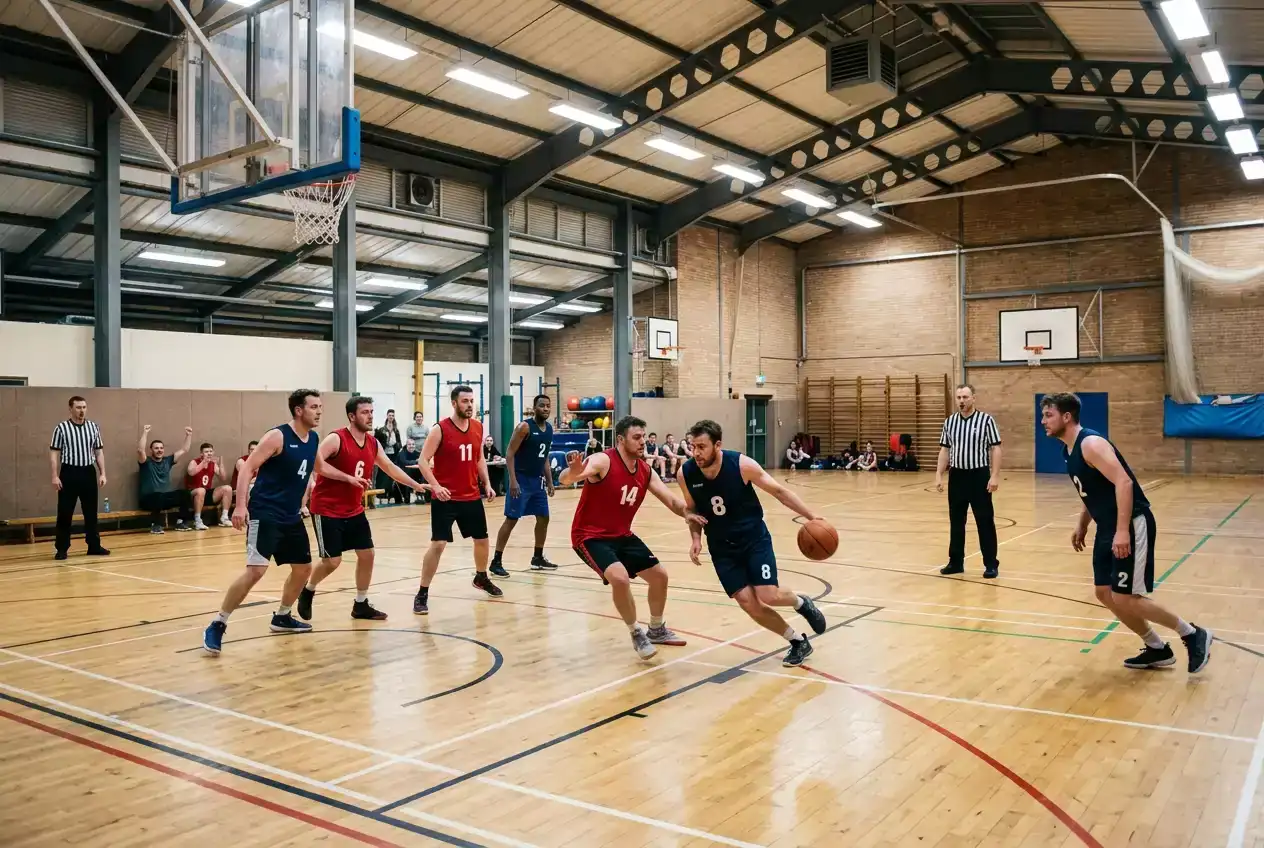
The bulk of recreational basketball in the UK happens in council-run leisure centres, school halls hired out for evening league play, university gymnasiums in cities with student populations, and outdoor courts in parks. London has a particularly dense concentration of public outdoor courts, especially in the inner-city boroughs where the sport has its strongest cultural foothold. The other major urban centres — Manchester, Birmingham, Glasgow, Leeds — have smaller but visible recreational scenes, often anchored around one or two well-known indoor venues.
What the UK doesn’t have is a deep network of private basketball-specific facilities at the recreational level. A player wanting indoor court time on a weekday evening typically books through a leisure centre or organises pickup at a school hall, which means the experience varies enormously by location. In some boroughs you can find indoor pickup five nights a week. In others you’d struggle to find a regular session within an hour’s drive. That fragmentation is the infrastructure debt that the sport’s growth would need to address as participation continues to climb.
The amateur league structure is similarly varied. Basketball England oversees the formal pyramid, but the participation numbers above the formal league system are dominated by recreational play that doesn’t pass through any organised competition. Most of the 1.5 million figure is people playing pickup, casual leagues and informal regular sessions rather than registered league players. That’s a feature of how recreational basketball works globally, not a UK-specific quirk, but it does mean the “official” participation figures from league bodies sit well below the actual participation rate.
The Schools and Youth Pipeline
The pipeline question — where the next decade of basketball players comes from — runs through the school system, and that’s where some of the most interesting trends are happening. UK schools have varied basketball provision; some run dedicated programmes, others treat it as one option among many in PE, and others don’t offer it at all. The variability is the legacy of basketball’s status as a non-traditional school sport in the British curriculum.
What’s changed in the last decade is the emergence of dedicated basketball academies attached to certain secondary schools and sixth-form colleges, often in partnership with Basketball England or with local club programmes. These academies typically run a more serious training schedule than mainstream school sport, and they feed into the under-age national setups that produce the players for senior representative basketball. The number of these academies has grown steadily, though it remains small in absolute terms compared to the equivalent infrastructure for football or rugby.
University basketball is the more mature pipeline. British university leagues run organised basketball at multiple levels, with the higher tiers producing competitive teams that travel nationally for matches. Many UK basketball players who go on to play professionally — domestically or in continental European leagues — pass through the university system. The British Universities and Colleges Sport (BUCS) basketball competition is one of the more visible parts of the amateur game, even if it’s still well below the cultural footprint of university rugby or football.
The constraint on the youth pipeline is the same as the constraint on adult participation: facility access. Schools that lack indoor sports halls cannot run basketball programmes regardless of student interest, and the geographic distribution of suitable facilities is uneven. The growth of recent years has happened despite the infrastructure constraints rather than because of investment in them, which is part of why the sport’s participation curve still has visible upside if the facilities catch up.
From Player to Fan to Bettor
The reason participation matters for prop bettors specifically is that the conversion from player to fan to bettor is one of the most reliable pipelines in any sport. The 1.5 million regular UK basketball participants are not all NBA fans, but a meaningful fraction of them are. The fraction that follows the NBA closely is also the fraction most likely to translate that fandom into prop activity when the product is available and well-presented.
The operator side of the UK gambling industry knows this. NBA prop menus have deepened on UK sportsbooks across the last several seasons, and the menu expansion has tracked closely with the engagement and viewership growth in the underlying audience. The participation pool is part of that engagement growth — players who actually play the sport tend to follow it more closely, watch more games, engage with more content, and bet more frequently when they choose to bet at all. The pipeline isn’t unique to basketball, but in the UK context the participation base is large enough to be a meaningful contributor to the prop market’s volume.
For bettors trying to gauge where the UK NBA betting market is heading, the participation figure is one of the most useful single data points. A sport with 1.5 million regular participants and a fast-growing broadcast audience is going to have a betting market that grows with it, on a several-year lag. The growth is real, the trajectory is up, and the product UK bettors interact with on operator sites is going to keep improving as the underlying audience justifies the investment. The Gen-Z digital engagement layer sits on top of this participation base and amplifies it, which is the territory the broader read on basketball’s Gen-Z climb in the UK picks up in detail.
Participation FAQ
Two questions on UK basketball participation come up persistently from readers who weren’t expecting the headline figure to be as high as it is.
Is basketball really the second most-played UK team sport?
Yes, by the standard participation surveys that include both organised and recreational play. The figure of around 1.5 million people playing at least twice a month puts basketball ahead of rugby union, rugby league, cricket, hockey, netball and most other established British team sports. Football is the only team sport with a higher participation count, and the gap between football and basketball is wide. The position is stable across recent participation studies and reflects basketball’s strong recreational presence in urban areas.
How does participation translate into NBA fandom?
The translation isn’t one-to-one — plenty of people play casual basketball without following the NBA closely, and plenty of NBA fans don’t actively play. But there’s a real overlap. Active players are more likely to watch live games, engage with basketball content, attend live events when they’re available, and convert into the kind of serious fan who buys merchandise, subscribes to League Pass or Prime, and follows the league through the season. The participation base is the recruitment ground for the most engaged tier of NBA fandom in the UK.
A Bigger Floor Than Most Realise
Most narratives about basketball in the UK start from the assumption that the sport is small and explain why it’s growing. The participation data flips that framing. Basketball isn’t small in the UK. It’s mid-table by participation among team sports, second only to football, and it’s been quietly that size for longer than most casual observers have noticed. What’s small is the sport’s commercial and broadcast footprint relative to its participation rank, and that gap has been the closing variable across the last several years rather than a permanent state of the British sports landscape.
The 1.5 million figure isn’t a peak. It’s a floor. The Gen-Z engagement growth, the broadcast distribution expansion via Prime Video, the live-event success of NBA Global Games at the O2 — all of these point toward a participation base that’s likely to keep growing rather than plateau. The infrastructure constraints will be the binding ones, not the demand. For UK bettors, broadcasters and the operator side of the betting industry, the participation number is the cleanest evidence that the audience is real, durable, and bigger than the cultural visibility of the sport would otherwise suggest.
Prepared by the nba Props Betting editorial staff.