UK Sportsbooks for NBA Props: Compare Bookmakers
 Available in US
Table of Contents
- Comparing UK Bookmakers: Market Depth and Alt Lines
- The UKGC Baseline Every Operator Must Clear
- Six Criteria for Comparing Prop Menus
- Market Depth: How Many Prop Lines Per Game Actually Show Up
- Alt Lines, Bet Builders and Same-Game Multis
- Payments, Withdrawal Speed and Verification
- What UK Search Share Tells Us About Operator Visibility
- Customer Support and In-App Responsible-Gambling Tools
- How a Practical Comparison Actually Gets Done
- UK Sportsbook FAQ for NBA Props
- The Operator Decision Is a Tooling Decision

Comparing UK Bookmakers: Market Depth and Alt Lines
I get asked the same question almost weekly. Some version of “which UK sportsbook is the best for NBA player props”. My honest answer disappoints people. There is no single best operator, and the bettors who keep asking the question are usually the ones losing money. The right question is which combination of two or three UK-licensed operators gives me the best price on the specific bet I want to place tonight, and that answer changes every evening of the season.
The framing of “best bookmaker” comes from how the gambling industry markets itself. Adverts compete on free bets, on apps, on sponsorship deals. None of those things help the long-run bettor. What helps the long-run bettor is line variance — the simple fact that two licensed operators in 2026 will price the same Anthony Davis rebounds line at different numbers, and the bettor who consistently takes the better number compounds an edge that the operators built their margins around.
The UK PPC data tells you something useful about who is visible, not who is sharpest. In April 2026, Ladbrokes held 36.8% of paid clicks in the UK sports betting search segment, while Sky Bet held 23.85%. Visibility is a marketing outcome. Pricing is an operational outcome. The two often have very little to do with each other, and a bettor who confuses the first for the second has already lost the analytical battle.
This article walks through how I actually compare UK-licensed sportsbooks for NBA props. The licensing baseline. Six concrete criteria I score operators against. How to assess market depth, alt lines, builder pricing, withdrawal speeds, support quality and responsible-gambling tooling. The aim is not to crown a winner. The aim is to give you a framework so you can make the comparison yourself, every season — because the decision belongs to you and not to a marketing department.
Before placing your wagers, make sure you fully understand the specific NBA prop settlement rules regarding overtime and voided bets.
The UKGC Baseline Every Operator Must Clear
A friend asked me last year whether a particular sportsbook he had seen advertised on a foreign-language site was safe to use. He had transferred about £600 across over a few weeks and had started running into withdrawal delays. The site did not hold a UKGC remote licence. He was not protected by UK law. He eventually got most of his money back, but the experience cost him months of stress and the better part of a thousand pounds in legal fees. Licensing is the entire foundation.
The Gambling Commission is the regulator for any operator that takes bets from customers physically located in Great Britain. As of the Industry Statistics Annual Report covering April 2024 to March 2025, there are 1,786 licensed operators in the UK alongside 8,234 licensed gambling premises — a number that has fallen 1.1% year on year. Every operator I compare in this article holds a current remote licence, and any operator that does not is outside the scope regardless of how attractive its prop menu might appear.
Holding a UKGC licence costs the operator real money, and that cost is rising. From 6 April 2025, the UK introduced a statutory gambling levy across all UKGC licensees — 1.1% of leviable amount for remote operators, and between 0.2% and 0.5% for non-remote venues. That levy funds research, education and treatment for gambling harm. Unlicensed sites do not pay it, which is one reason their pricing can look superficially attractive. It is also one reason you should not bet with them.
The licence does three concrete things for a bettor. It gives you a regulator to complain to when something goes wrong. It guarantees that customer funds are held to a defined protection standard. And it requires the operator to comply with rules around fairness, advertising, responsible-gambling tooling and dispute resolution. The protections are not theoretical. I have used the official complaints route myself when an operator settled a market incorrectly, and the outcome was a refund of the full stake plus a written apology within thirteen working days. That outcome is not available on an offshore site.
Verifying a licence takes about ninety seconds. The operator should display the licence number in its footer and link to a public register entry. The register confirms the trading name, the licence type and the current status. If a site does not display this clearly, treat that as the answer to whether you should deposit money with it. Every comparison I run starts with this check.
Six Criteria for Comparing Prop Menus
Here is a question I find useful to ask before signing up for any operator. If I were placing a bet on a points line for a starting NBA wing tonight, what would I be evaluating about the operator before I clicked confirm? The answer turns into six criteria, and I score each operator against them when I am deciding which two or three to keep open in my browser tabs.
The first criterion is licensing and dispute path, which the previous section covered. No UKGC licence, no consideration.
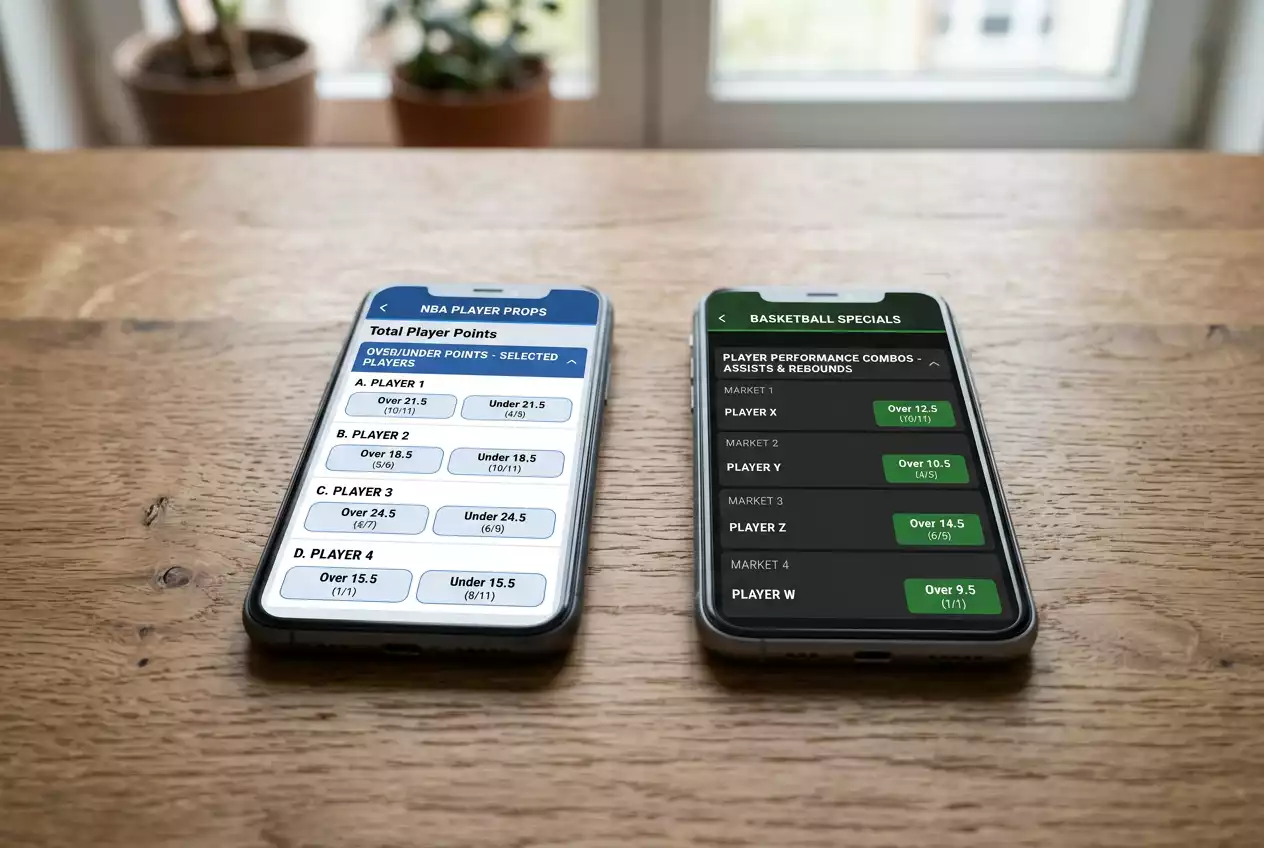
The second is market depth — how many distinct prop lines an operator offers per game on a typical weekday during the regular season. A thin menu publishes points, rebounds, assists and threes for the starting fives. A deep menu adds steals, blocks, turnovers, double-doubles, triple-doubles, and combination markets like points plus rebounds plus assists. The difference between thin and deep is the difference between three plausible bets to consider and fifteen.
The third is alt-line availability. Most operators offer the main line as a 50/50 over/under. The sharper operators also offer alternative lines — the same player’s points at a different number with adjusted odds. The depth of the ladder is one of the cleanest signals that an operator has a real props desk rather than a recycled-feed model.
The fourth is bet builder and same-game multi pricing. UK operators have invested heavily in builder products since 2022, and quality varies enormously. Some price builder legs as if they were independent events, which they almost never are. Others apply correlation adjustments that reflect the real overlap between, say, a player’s points and his team’s total points. The fairness is measurable, and I will return to it.
The fifth is payment infrastructure. How quickly does a withdrawal land. What payment methods are supported. How often does verification freeze withdrawals for additional checks. A sportsbook that holds your winnings for a fortnight while requesting a third utility bill is not one I want to use heavily. Payment friction is real friction.
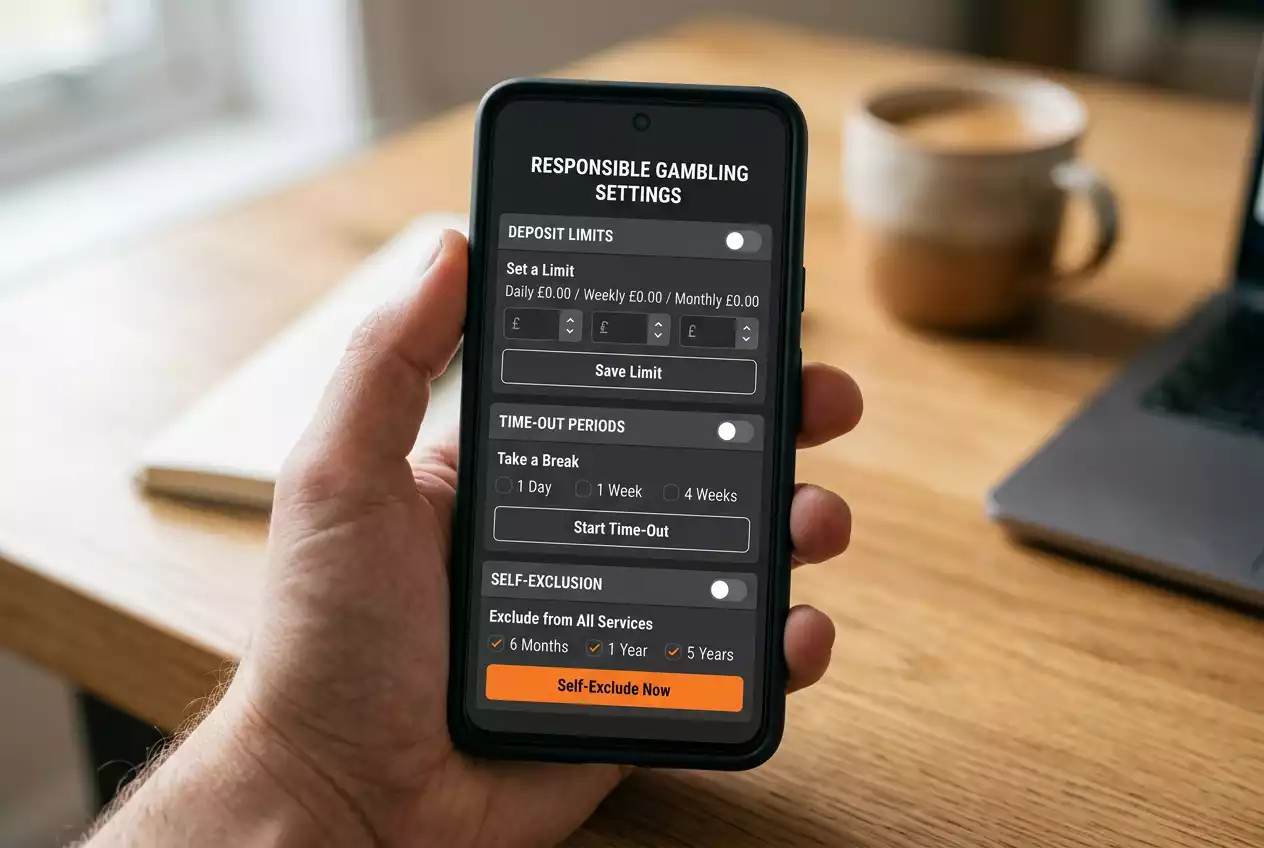
The sixth is responsible-gambling tooling and customer support. Every UKGC licensee must offer deposit limits, time-out tools, self-exclusion and access to GamCare and similar services. Execution differs — some operators bury these tools several screens deep, others surface them prominently. As the regulatory bar rises, this matters more, not less.
Licensing, depth, alt lines, builder pricing, payments, support and responsible-gambling tooling. None of them have anything to do with sign-up offers or sponsorship deals. All of them have everything to do with whether you can actually place the bet you want at a fair price and get paid promptly when you win.
Market Depth: How Many Prop Lines Per Game Actually Show Up
I once counted the lines available on a single Wednesday-night Lakers fixture across four UK-licensed operators. The thinnest menu offered nineteen distinct prop markets across all players on the slate. The deepest offered just over one hundred and sixty. Same fixture. Same NBA. The difference is what the operator chooses to publish.
Market depth comes down to two things. How many stat categories are offered, and how many players within those categories have lines posted. A thin operator might post points, rebounds and assists for the starting five and nothing else. A deep operator posts the same three for the starting five plus the first two off the bench, then adds threes, steals, blocks, turnovers and combinations. The deeper menu lets you bet the matchup that actually has an edge, rather than forcing you into a market that only nominally exists.
For a serious bettor, depth matters because edge is rare. If you have done the work and identified that, say, a backup point guard will see expanded minutes because a starter is questionable, the only way to monetise that view is if the operator offers a points line on that backup. A thin menu means you watch the bet you wanted to make get capped. A deep menu means you can place it. Niche lines often have higher win rates than starter lines because the bookmaker has spent less analytical effort pricing them.
There is a related question of how early lines are posted. Some operators publish twenty-four hours before tip-off; others wait until two hours before. Early posting helps the bettor reacting to overnight injury news. Late posting reduces the operator’s risk window and tightens early lines. Either approach has trade-offs. Knowing which model an operator runs is part of knowing the operator.
The honest health check on depth is to log in to a candidate operator on a random Wednesday in February and count the prop markets available for a mid-tier fixture. Not opening night. Not the playoffs. A boring league game between two non-marquee teams. Marquee fixtures get full menus everywhere; mid-tier fixtures separate the operators with real props desks from the ones running a maintenance feed.
One more practical note. Depth is not the same as quality. An operator can offer two hundred markets per game, all of them priced lazily off a generic projection model. Another might offer eighty, all priced with care. The way to figure out which is which is to watch how the lines move when news breaks, and to compare prices against a no-vig fair value calculation across at least two operators before placing the bet.
Alt Lines, Bet Builders and Same-Game Multis
Picture a player whose main points line sits at 24.5. The standard market gives over and under at roughly even odds. An alt-line ladder gives you over 19.5 at much shorter odds, over 21.5 at slightly less short, over 24.5 at the main number, over 27.5 at longer odds, and over 30.5 at much longer odds. Each rung is a different bet with a different risk profile. A deep ladder is a signal that the operator’s props desk is doing real work.
Alt lines matter for two reasons. First, they let you express a more nuanced view than a 50/50 over/under allows. If I think a starting wing is going to have a quiet game because of a tough defensive matchup, I can bet under 19.5 rather than under 24.5. Second, alt lines are often pricing-inefficient at the extremes. The main number gets the most trader attention; the rung four steps below it often sits closer to a maths-only price. A patient bettor with a good projection can find genuine edge at the wings of the ladder.
Bet builders are the other major product UK operators have leaned into — combine multiple legs from the same fixture into a single bet at combined odds. The execution is where the variance creeps in. A correctly priced builder applies correlation adjustments. If I bet a player to score over 25 points and his team to win, those legs are positively correlated; the same player scoring well makes his team more likely to win, and the operator should reduce the combined odds to reflect the overlap. A lazy builder treats the legs as independent and pays a number that is too generous to the operator and too punitive to the bettor.
The way to test a builder is to compare its quoted price against the implied price of its component legs as if they were independent. If legs are negatively correlated, a fair builder should pay slightly more than the independent calculation suggests. If positively correlated, slightly less. If pricing always looks the same regardless of correlation direction, the model is independent and you are getting a worse number whenever you build legs that move together.
Same-game multis sit between alt lines and full builders, offering pre-packaged combinations of headline markets at a price set in advance. The convenience is real. Pricing fairness varies. As a rule, I price the same combination across two or three operators before placing one, and the variance I see between operators on identical multi combinations is often larger than on single-prop main lines. That tells you how much modelling effort has gone into the multi product.
Use builders sparingly. They are entertainment products as much as analytical products, and operator margins built into them are typically wider than on single props. If you are betting builders for fun, that is fine. If you are betting builders to find edge, you need to be confident in your correlation analysis, and even then, the headroom is smaller than on the main markets.
Payments, Withdrawal Speed and Verification
An operator’s payment infrastructure tells you something about how the business actually runs. I once had a six-figure withdrawal request held for nine days while their compliance team requested a fourth piece of identity documentation that I had already submitted twice. The funds eventually arrived. The trust did not. I closed the account that month.
UK operators support a fairly standard set of deposit and withdrawal methods. Debit card. Bank transfer. Various e-wallets such as PayPal, Skrill and Neteller. Some operators support open-banking instant payments, which can settle within minutes; others still rely on traditional rails that take one to three business days. The headline withdrawal speed an operator advertises is rarely the speed you actually experience, especially on larger amounts where additional verification triggers kick in.
Verification is where the friction concentrates. UKGC licensees are required to verify customer identity at registration and to perform enhanced due diligence on certain transaction patterns. The friction this creates is, in my view, generally proportionate. Operators that handle it well request documentation up front, process it quickly and rarely ask twice for the same thing. Operators that handle it poorly drip-feed verification requests across multiple withdrawal cycles, which from the bettor’s perspective feels indistinguishable from being managed off the platform.
The honest assessment is that you can only really judge an operator’s payments by trying. Open an account with a small deposit, place a few bets, attempt a withdrawal in the £200 to £500 range. The speed and friction you experience on that first withdrawal is your data point. If everything settles within two working days with minimal back and forth, the operator is competent on this dimension. If it takes a week and three documents, you have your answer.
One pattern worth flagging. Some operators apply slower withdrawal handling to accounts that have shown a profit, particularly accounts that have placed bets on lines that subsequently moved sharply. The official term is “trader review”, and while it is within the operator’s rights under their terms, it is also a signal that the operator’s tolerance for sharp customer behaviour is low. Bettors who plan to take prop markets seriously over the long run should prefer operators with a reputation for processing winning withdrawals as routinely as losing ones.
What UK Search Share Tells Us About Operator Visibility
Stop and look at the numbers from the April 2026 Adthena UK Gambling and Gaming sports betting PPC market share analysis. Ladbrokes held 36.8% of paid clicks. Sky Bet held 23.85%. Those two operators between them accounted for more than three out of every five clicks bettors make on UK sports betting search ads. That is the visibility picture. It is worth understanding what it does and does not tell you.
What it tells you is about marketing budget, brand familiarity and the consequences of those two factors compounding. An operator that captures 36.8% of paid clicks is spending heavily and ranking well, both of which require sustained investment over years. The trust that comes with brand familiarity has real value to a recreational bettor, particularly one who has not previously dealt with offshore operators and wants to start with a household name.
What it does not tell you is anything about prop pricing fairness, market depth or builder accuracy. A bettor who optimises only for visibility ends up at the operator with the largest marketing budget, which is correlated with operational competence but not perfectly. The bettor who optimises for prop quality may end up at a different operator entirely.
The financial scale reinforces this. The Flutter Entertainment group, which includes Sky Bet, Betfair and Paddy Power, generated over $2.8 billion in UK and Ireland sports betting and iGaming revenue in 2023, with the 2025 forecast around £2.36 billion. The bet365 Group recorded £3.72 billion in group revenue for the financial year ending 31 March 2024. Those numbers explain the marketing reach. They do not, in themselves, tell you which operator will price tonight’s Anthony Davis rebounds line at the friendlier number.
For the bettor, the practical use of this data is to recognise that visibility creates gravitational pull. The operators you see most are the operators most bettors use, and the ones used most have the most liquidity, which generally means tighter lines on flagship markets. That is a feature — tight lines mean efficient pricing — but it also means edges, when they appear, are more often found at smaller operators with thinner liquidity and less attention paid to mid-tier props. The strategy work I covered in my deep dive on bet365’s NBA player specials illustrates how a single operator’s menu actually breaks down in practice. The general lesson translates across the market.
Customer Support and In-App Responsible-Gambling Tools
Two questions tell you most of what you need to know about an operator’s customer support. How quickly does someone respond when you contact them. And how often does that response actually solve the problem rather than punt it to a different team. Across the UK-licensed market in 2026, the variance is one of the more reliable signals of how an operator treats its customers more broadly.
Live chat is now the default first contact channel. The good operators staff it twenty-four seven and route prop-specific questions — settlement queries, void rule questions, line-related complaints — to agents who actually know the markets. The poor operators run a generic agent pool that hands off most prop questions to email support, where the response cycle stretches from hours to days. Email is fine for documentation requests; it is not fine for a settlement dispute on a slip placed two minutes before tip-off.
Phone support is increasingly rare among the main operators. The replacement is in-app messaging, which is functionally chat. Quality depends on staffing levels and on whether the operator escalates trading-related queries promptly.
Responsible-gambling tooling is the area where regulatory pressure has changed operator behaviour most visibly. The Remote Technical Standard 12, covering financial limits, came into effect on 31 October 2025 and tightened the rules around how UK operators must offer and display deposit-limit tools, time-out functions and self-exclusion options. The intent is straightforward — make these tools visible, easy to use and impossible to bury. The regulatory floor has risen, and operators that ignored these tools previously have had to invest in them.
For the bettor who never plans to use these tools personally, why care. Two reasons. First, operators that take responsible-gambling tooling seriously tend to take operations seriously across the board. Second, gambling is a long-term activity, and bettors’ circumstances change. Knowing the tools are there is part of the operator package.
Peer-reviewed work on sports betting marketing and youth problem gambling concluded that “sports betting marketing appears to be implicated in young people’s gambling problems. Specifically, young people who have gambling problems may be more likely to bet in response to advertising, and betting incentives may contribute to an intensification of their gambling behaviour.” That is a useful counterweight to the marketing-driven framing that dominates the consumer-facing side of the industry. The operator that surfaces its responsible-gambling tools clearly is treating the bettor as someone whose long-term welfare matters. That is a feature worth selecting for.
How a Practical Comparison Actually Gets Done
Here is what my actual operator comparison process looks like. I keep a one-page document with a row for each operator I am evaluating and a column for each of the six criteria from earlier. The cells contain notes, not scores. Scoring an operator out of ten on something like “alt-line depth” feels analytical but is actually arbitrary. Notes work better because they capture the texture of what I am observing.
Take a typical evening. I open the same NBA fixture across three operators. I look at the points line on the same player. I note the price each is offering and whether they have an alt-line ladder. I check whether a builder including that points leg is priced fairly relative to the independent calculation. I screenshot the result for my own records. None of this takes longer than five minutes per market, and the data accumulates over a season into a real picture of which operator is doing what.
The thing I do not do is publish a definitive ranking. The right operator for one bettor is not the right operator for another. A bettor who only ever bets pre-game on flagship markets cares almost nothing about in-play depth or alt-line breadth. A bettor who lives in builders cares enormously about correlation pricing and almost nothing about main-line edge. The criteria matter; the weights are personal.
The comparison evolves. Operators change their props desks, their pricing models, their builder logic. An operator that priced builders fairly in 2024 may have changed approach by 2026, and the bettor who has not re-tested in two years is operating on stale information. My personal cycle is to repeat the full comparison once at the start of each NBA season and to spot-check throughout when something feels off.
Treat the comparison as a maintenance task. The bookmaker landscape moves; your view of it should move too. The bettors who sign up to one operator on the basis of a free bet and never re-evaluate are leaving the most edge on the table over a five-year horizon.
UK Sportsbook FAQ for NBA Props
The questions below are the ones I get asked most often when readers email me about UK operator selection for NBA props.
Is bet365 actually the deepest UK book for NBA player props?
Depth varies by season, by player tier and by stat category. bet365 historically offers a wide menu and a deep alt-line ladder on flagship players, but several other UKGC-licensed operators run comparable depth on different fixtures. The honest answer is that no single operator is the deepest across the entire NBA slate, and the bettor who runs the comparison themselves on a typical mid-week fixture will get a more accurate picture than any blanket claim about which operator is best.
How do I check that a sportsbook holds a current UKGC remote licence?
The operator must display its licence number in its footer, and that number should link to a public register entry on the regulator’s site. The register confirms the trading name, the licence type and the current status. Verification takes about ninety seconds. If the information is not displayed clearly, do not deposit money with the site, regardless of how attractive the prop menu looks.
Are bet builders priced fairly versus single props?
Some are, many are not. A correctly priced builder applies correlation adjustments to legs that move together or against each other. Many UK operators price builders as if the legs were independent, which produces combined odds that are too short relative to the maths. The way to test it is to calculate the implied price of the legs as independent events and compare to the operator’s quoted price. A consistent gap that favours the operator means the builder is not adjusting for correlation, and you are paying a wider effective margin than on the single props.
Should I use multiple UK sportsbooks for NBA props?
Yes, in almost every case. Two or three accounts at UKGC-licensed operators is the practical minimum for serious prop betting. The price variance between operators on the same market is large enough that consistently taking the better number compounds into a meaningful long-run edge. Using one operator only means accepting whatever number that operator chooses to publish.
The Operator Decision Is a Tooling Decision
The frame I want to leave you with is this. Choosing which UK-licensed sportsbook to use for NBA player props is not a consumer-loyalty question. It is a tooling question. The same way a tradesperson chooses which tools to keep in the van based on the jobs they actually do, a prop bettor chooses which operators to keep open based on the markets they actually bet.
Finding the best odds across different platforms is a core strategy taught by the experts at NBA Props Betting.
The decision starts with the licensing baseline. If an operator does not hold a current UKGC remote licence, it does not make the list. The protections that flow from that licence — fund security, dispute resolution, advertising rules, responsible-gambling tooling — are the floor every bettor should refuse to drop below. From there, the comparison runs through depth of menu, quality of alt lines, fairness of builder pricing, speed of payments and quality of support. None of those criteria are about brand. All of them are about whether the operator can actually deliver what a serious bettor needs.
The visibility data is interesting context, not guidance. A 36.8% PPC share tells you who is winning the marketing battle, not who is pricing tonight’s Anthony Davis line at the friendlier number. A multi-billion-pound revenue figure tells you which group has the largest operational footprint, not which group has the most attentive trader staffing the rebounds line at 8pm on a Tuesday.
Treat the comparison as ongoing maintenance. Run it once per season. Keep two or three accounts active. Take the best price on every market you bet. Watch how operators handle your wins as carefully as how they handle your losses. The patient bettor who treats operator selection as a tooling decision is the bettor who turns the variance the bookmaking industry built into the system into a small but compounding personal edge.
Created by the ”nba Props Betting” editorial team.