NBA Prop Settlement Rules: Integrity and Void Bets
 Available in US
Table of Contents
- NBA Settlement Rules: Overtime and Void Conditions
- Void Rules: When the Stake Comes Back vs When the Bet Stands
- Does Overtime Count? The Default and the Exceptions
- Early Exit, Injury Within 60 Seconds and Other Edge Cases
- The Rozier Case: What Prosecutors Said and Why It Matters
- Adam Silver on Manipulation, Micro Props and Integrity Tools
- What Has Already Changed on UK Prop Menus
- Harassment, Athlete Wellbeing and Why It Concerns Bettors Too
- Reading T&Cs Before You Confirm: A Bettor Checklist
- Trust the Slip Only When You Know How It Settles

NBA Settlement Rules: Overtime and Void Conditions
A friend of mine placed a single-stat over on a star wing’s points at 22.5 in the autumn of 2024. The player started the game, played about ninety seconds, took a hard fall and was ruled out for the remainder. My friend assumed he had lost the bet because the player had not come close to the line. Three days later he checked his account and the stake had been refunded. Different operator from the one his mate at work used. Same player, same fixture. Same outcome on the floor. Different settlement.
That is the part of NBA prop betting nobody wants to read about until they have to. The settlement rules — what counts as a void, what counts as a bet that stands, what overtime does to a points line, what happens when a player is downgraded thirty minutes before tip — quietly decide whether the slip you placed two days ago turns into a green or red entry on your statement. Half of the prop bettors I know cannot recite the void rules of the operators they use. All of them have been burned by them.
The framing I want to set up before we get into the weeds is this. Settlement is not where the action happens. It is the boring, paragraph-six T&Cs layer of the product that nobody clicks through. Which means it is also where the asymmetric losses live. You can play the matchup perfectly, build the projection cleanly and pick the right side of the line, and still lose the bet because your operator’s overtime treatment differs from the one you assumed. The integrity story is part of this picture too — the Rozier case, the Adam Silver remarks, the prop-menu changes that followed — because it is changing what gets settled in the first place.
This article is the document I wish someone had handed me when I started taking NBA props seriously. It covers void rules, overtime, early-exit edge cases, the Rozier indictment and what it actually changed, the Silver position on micro markets, the menu shifts on UK books, the harassment story that runs alongside the integrity story, and a checklist for reading T&Cs before you confirm. None of it is glamorous. All of it pays.
Void Rules: When the Stake Comes Back vs When the Bet Stands
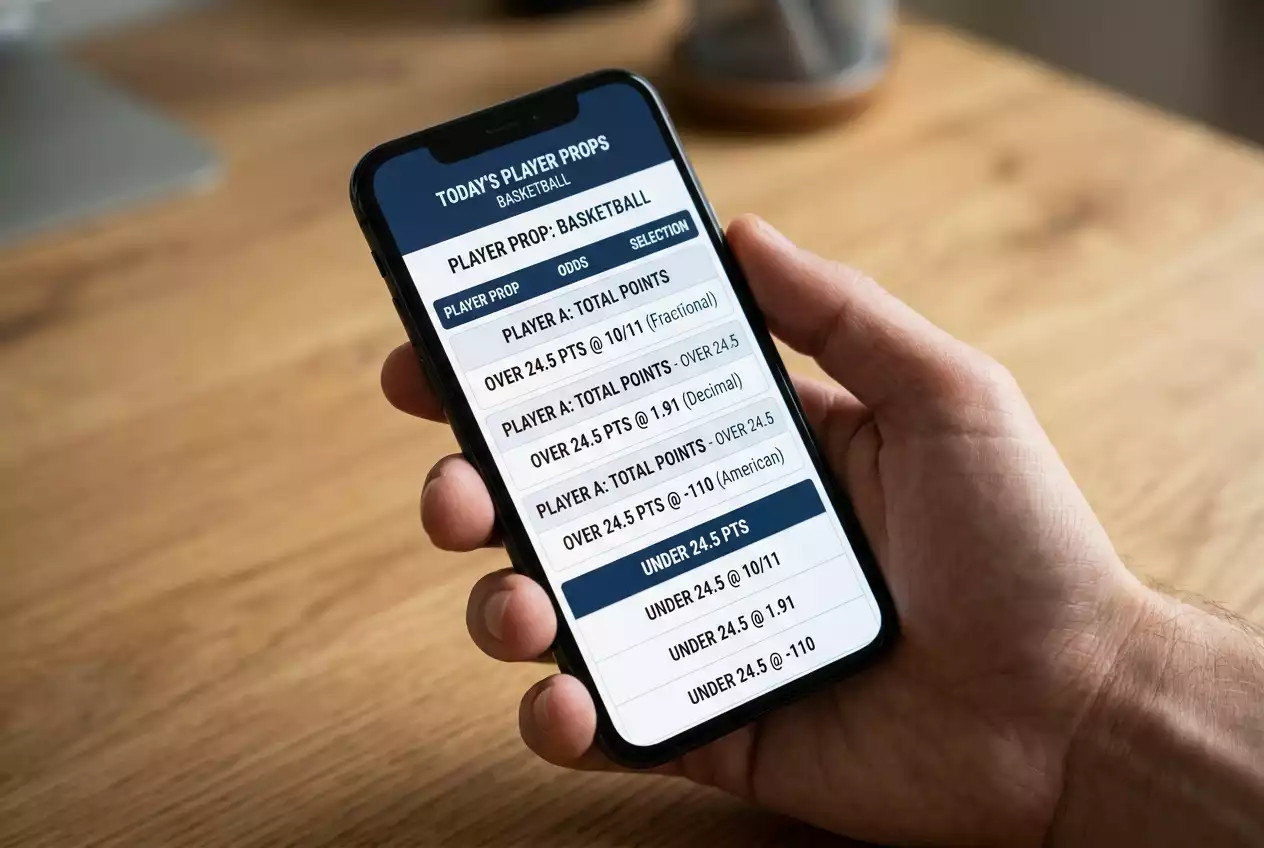
Imagine the NBA’s most popular over of the season. Star player, points line of 28.5, picture-perfect matchup, opening price drifts to 1.95 because too many bettors have piled in, you take the bet at the better number. Game tips off. Forty seconds later the player tweaks an ankle, walks straight to the locker room and does not come back. What happens to your slip?
The honest answer is: it depends on which UK-licensed sportsbook took the bet. There is no single industry-wide void rule for NBA player props in the UK, and the variation between operators is wider than most bettors realise. Three patterns dominate, and you should be able to identify which one your preferred operator follows before you ever confirm a stake.
The first pattern is the strict-minute rule. If the player records less than a stated minimum playing time — commonly five minutes, sometimes ten, occasionally just any time on the court — the bet is voided and the stake returned. Bettor-friendly because it protects you from being settled as a loser on a player who never had the chance to clear his line. Operator-friendly because it removes the most contentious settlement complaints from the queue.
The second pattern is the all-action rule. The bet stands as soon as the player takes the floor, regardless of how long he plays. If the line is 22.5 points and the player exits after a single missed jumper, the bet settles as a loss. This rule is operator-friendly and has historically been more common on aggressive prop menus where books want to keep settlement clean.
The third pattern is a hybrid: bet voids if the player fails to play any minutes, but otherwise stands. This is essentially “all-action with late-scratch protection,” and it is the most common pattern on UK books in 2026. It protects the bettor from absolute scratches but does not protect against early exits. Under this rule, my friend’s ninety-second-of-action bet would have stood and lost.
The practical advice is to know your operator’s rule before you place the bet, not after. The information is in the rules section of the sport — usually under “Basketball” or “NBA Player Specials” — and it is rarely more than a paragraph or two. Reading it once costs four minutes. Not reading it has cost me, personally, more money than I want to add up.
One specific edge case that catches bettors out is the late-scratch versus pre-game-out distinction. A player ruled out before lineups are announced typically results in all bets on him being voided automatically. A player ruled out after the official lineup is announced — but before tip-off — sits in a grey zone where some operators void and some leave the bet to ride. If the player is then a healthy scratch by coach’s decision rather than injury, the rules sometimes diverge again.
Does Overtime Count? The Default and the Exceptions
Here is a small thought experiment. Your player is on 24 points after regulation. The line is 24.5. The game goes to overtime. He scores three points in OT and finishes with 27. Did your over win?
For most full-game player props on UK-licensed sportsbooks, the answer is yes — overtime counts by default. Points, rebounds, assists, threes, blocks, steals, PRA combos and almost every other full-game stat line are settled including any overtime periods played. This is the default treatment across the operators I track, and it is the assumption you should bring to any standing prop unless the rules tell you otherwise.
The exceptions are where bettors get caught. Quarter-by-quarter props — points scored in the first quarter, rebounds in the third — settle on regulation only and are not affected by overtime under any operator I am aware of. Half props — points in the first half, points in the second half — are similarly regulation-only on a per-half basis, with overtime treated as separate and not added into the second-half count. These rules are intuitive once you think about them, but the intuition only kicks in if you have read the rules.
The grey area is a small set of derivative props that a few operators offer where the overtime treatment is non-obvious. Race-to-X markets — first player to ten points, first to score in OT — are settled differently across books, with some treating the race as ended at the buzzer and others including overtime by default. If you build a parlay around a derivative market, check the specific rule for that market type, not the generic basketball rules page.
The reason overtime treatment matters more than it seems is variance. About one in eleven NBA games goes to overtime in a given season. That sounds rare until you consider that a meaningful share of close lines are decided by it. A player who finishes 24 in regulation and then scores 4 in overtime to land on 28 has crossed two whole lines that had been priced as live going into the final minute. The variance is not symmetric — the over-bettor benefits when the game extends, and the under-bettor benefits when the game ends in regulation. If you systematically lean to one side of the line on counting stats, you have a built-in OT bias you should be aware of.
One narrow point worth raising. A small number of operators have, at various times, run “regulation only” specials on full-game lines as a promoted variant. These are clearly labelled when they exist, but the labelling can be subtle. If you see a slightly different line on the same player at the same operator on a single fixture, check whether one of the two is a regulation-only variant. The difference can be material.
Early Exit, Injury Within 60 Seconds and Other Edge Cases
The first sixty seconds of a game are where my settlement nightmares live. A player walks out for tip-off, takes one possession, plants oddly, hobbles to the bench and is gone for the night. He never gets near his line. Whether you win, lose or get your stake back depends on settlement language so specific it could fit on a beer mat.
The most common edge case is the one-minute injury — a player who plays between thirty seconds and a few minutes, never approaches his line, and is then ruled out. Under strict-minute void rules with thresholds of five or ten minutes, the bet voids and the stake returns. Under all-action rules, the bet stands and settles as a loss. Under the hybrid rule that requires “any time on court,” the bet stands. The same fixture, the same player, the same on-court reality can resolve as a refund at one operator and a loss at another. This is not a bug. It is the rule, and it is documented in the operator’s terms.
The downgrade-to-out-before-tip case is its own animal. If a player is downgraded from probable or questionable to out within a stated window before tip-off — usually thirty to sixty minutes — most operators void all standing bets on him. Some require the downgrade to come from the official team source, while others accept reliable reporting. The window matters because anything outside it tends to be treated as “you should have known when you placed the bet.”
An adjacent case is the rest day announced after lineups. NBA load management has produced more of these in the past three seasons than ever before. A star is announced as part of a starting lineup, then ruled out for rest before tip. Some operators treat this as identical to a late injury scratch and void all standing bets. Others draw a distinction between injury-related and rest-related scratches, voiding the former and standing the latter. Read the rules.
The rare-but-painful case is the in-progress game suspension. NBA games have, on a handful of occasions, been suspended for safety, technical or medical reasons after tip-off. The settlement treatment depends on whether the game is later resumed, voided or rescheduled. Most operators have a generic “abandoned games” clause, but the specifics are not standardised. If you bet a fixture that suffers an unusual interruption, expect to wait for an operator decision.
The Rozier Case: What Prosecutors Said and Why It Matters
Joseph Nocella Jr., the U.S. Attorney for the Eastern District of New York, called it an insider sports betting conspiracy that exploited confidential information about NBA athletes and teams. That is the language from the press conference that announced the Terry Rozier indictment in October 2025, and it is worth letting that phrasing land for a moment. The allegation is not that bettors got lucky. The allegation is that they had inside information and built a conspiracy around it, and that the proceeds ran into tens of thousands of dollars on a single set of trades, against a backdrop of NBA gambling schemes that the FBI’s Kash Patel said collectively produced tens of millions in illegal profit across multiple years.
The specifics, as outlined by prosecutors in the case dating to a March 2023 fixture, were that bettors were tipped to a planned early exit by a player and placed under bets and prop unders on his counting stats accordingly. The under cashed because the player left the game well before he had any chance to approach his lines. The financial scale of any individual placement was modest by professional gambling standards. The legal scale, the reputational scale and the integrity-policy scale were enormous, and every UK-licensed sportsbook running NBA props had to react.
What changed downstream is genuinely consequential for UK bettors. Operators tightened their integrity-monitoring procedures on micro-prop markets, which had been the main vector of concern. Some markets were temporarily pulled from menus during the active investigation period. Settlement protocols around early-exit cases were reviewed. Several operators added explicit language to their T&Cs about void rights in the event of suspected market manipulation, language which had previously been generic.
For the UK bettor, the practical effect was a quieter one but a real one. Some prop types — particularly the very granular per-quarter unders on supporting cast players — became thinner, less consistently offered and more aggressively monitored. Lines on those markets sometimes get pulled mid-betting-window if liquidity arrives in unusual patterns. The deepest UK books still offer most of the standard prop catalogue, but the long-tail micro markets have been pruned.
The integrity discussion is not finished. The Rozier indictment was a single visible flashpoint, and the broader NBA gambling investigation Patel referenced points to a longer arc. Bettors should not panic — the standard prop catalogue is built on stat types where individual manipulation is much harder than on micro markets — but they should also not assume that what gets offered today will get offered in the same form a year from now. The product is moving as the integrity environment tightens.
Adam Silver on Manipulation, Micro Props and Integrity Tools
Listen to what Adam Silver, the NBA Commissioner, said on the Pat McAfee Show in October. It is too easy to manipulate something which seems otherwise small and inconsequential to the overall score, he argued — maybe a couple of rebounds that some player gets, or whatever — and the league is working with the betting companies to put in additional controls to prevent some of that manipulation. Two things stand out about that quote. The candour about the vulnerability is rare for a league commissioner. And the specific framing of the problem as one about marginal stats rather than headline outcomes points at exactly the markets the integrity tightening has hit hardest.
The other Silver remark from the same period that has done the rounds is the one about the digital era forcing a binary choice. The choice, as he put it on the same appearance, is between legalised sports betting or illegal sports betting — not between sports betting and no sports betting at all. The follow-on point is that with regulated structures, the league and operators can monitor in ways that were unimaginable a few years ago, watching for any aberrational behaviour in betting patterns that might indicate manipulation.
That framing matters for how the UK product is evolving. The NBA’s stance is not anti-betting; it is pro-regulated-betting with enhanced integrity controls. UK regulation, with the UKGC’s existing licensing and reporting framework, fits that model better than several others worldwide. The cooperation between the league and UK operators on integrity monitoring is closer to invisible to bettors most of the time, but it is the substrate underneath a lot of what changed after the Rozier indictment.
The micro-props question — what should still be offered, what should not, where the line gets drawn — is being relitigated in real time. Some operators have publicly committed to scaling back the most granular markets. Others have pushed in the opposite direction, arguing that aggressive integrity monitoring is sufficient. The compromise where the UK market has settled in 2026 is a mix: micro markets stay available but with thinner staking limits, more aggressive triggers for suspicious-pattern review, and faster void rights for the operator if something looks off.
For UK bettors with a grasp on the calculator stack — covered in detail in our walk-through of EV, no-vig and Kelly — the integrity environment matters because it changes which markets are available to apply those calculators to. You can have the perfect EV model for a particular micro market and find that the market is simply not on the menu any more. Adapt your menu to what the operators are willing to offer, not what your model wants to bet.
What Has Already Changed on UK Prop Menus
Three types of menu change have rolled out across UK-licensed operators since the autumn of 2025, and a UK bettor who has been paying attention will already have noticed at least two of them. The first is the contraction of certain micro-prop markets — first basket markets on bench-heavy fixtures, very granular per-minute or per-possession derivatives, and unusual in-play unders on rotation players. These markets have either disappeared, become intermittent or carry maximum-stake limits low enough that they are effectively retail-only.
The second is staking limit recalibration on player props. Operators who used to allow significant stakes on individual prop lines have, in many cases, pulled those limits down on the long-tail player markets while keeping them firm on the headline players. The asymmetry is intentional. Limits are tighter where integrity risk is higher, looser where the volume of legitimate action is large enough to make manipulation harder to disguise. If you are betting on a star at standard limits, this barely affects you. If you bet primarily on supporting-cast players, you will have hit smaller maximum stakes than you used to.
The third change is in the void-rights language. Several operators have added or strengthened terms allowing them to void bets retroactively if suspicious betting patterns are identified across a market. This is a meaningful change because it shifts settlement from “the result on the floor” to “the result on the floor plus an integrity overlay that can be applied after the fact.” For 99.9% of bettors this never matters. For the 0.1% who get caught up in a pattern review even by association, it can mean a hold on settlement and, in rare cases, a refund of a winning bet without explanation beyond the standard void clause.
The market response has been a slight cooling on the very edges of the prop catalogue and a slight deepening on the core. Headline player markets — top scorers’ points, rebounds, assists, PRA combos for the marquee names — have become more liquid, with tighter opening lines and faster reaction to news. The supporting-cast and bench-player markets have become thinner. The bet builder, where multiple props combine into a single slip, has remained a focal product for operators because the higher hold rates compensate for the integrity scrutiny.
The longer-run consequence I expect to play out is convergence. UK operators currently differ in how strict their void rules are, how aggressively they pull markets and how transparent their settlement language is. Regulatory and reputational pressure is pushing all operators toward a stricter shared baseline. Within two seasons I would expect the cross-operator variation we see today on void rules and micro-prop availability to narrow significantly. That is a structural shift, and one that will reduce some of the operator-shopping value that exists in 2026.
Harassment, Athlete Wellbeing and Why It Concerns Bettors Too
An NCAA letter in January noted that 36% of Division I men’s basketball players reported receiving harassment from someone with a betting interest, and the trend across NCAA surveys has been a significant increase. That figure is from college basketball, not the NBA, but it points to a phenomenon that has cracked the surface in NBA fixtures as well: bettors who have lost a slip going after the player they blame, on social media, in DMs, occasionally outside venues. This is not a niche problem any more.
The reason it matters to bettors — beyond the obvious moral one — is that the regulatory and league response to harassment is going to shape the product environment over the next few years. Operators are being pressured to add bettor-conduct clauses to their account terms, sometimes with provisions that allow account closure for verified harassment cases. Leagues are publicly calling for stricter platform moderation around player-mentions during games. The product side of all this will probably be tighter integration between bet-tracking and identity-verification systems, which has implications for how anonymous betting can remain even within UKGC frameworks where identity verification is already extensive.
The other thread is the player wellbeing one. NBA players have spoken publicly about the experience of going from athletes to objects of speculative trades — every missed shot becomes a slip someone has just lost, every minor injury becomes a prop-betting headline. The cumulative pressure changes how some players interact with social media and, in a small number of cases, how they discuss injuries and rotations during the week. Information flow from teams to public has become slightly more guarded as a result, which has knock-on effects for prop bettors trying to build news-driven projections.
The honest framing for the bettor is that prop betting is a participation in a market that has direct and indirect effects on the people whose performance you are trading on. Most bettors take this seriously, behave well, and never come within a mile of harassing a player. The minority who do not have made the entire activity look uglier than it is, and the regulatory response is going to land on the whole bettor pool. That is a fact pattern worth thinking about clearly rather than ignoring.
Reading T&Cs Before You Confirm: A Bettor Checklist
The discipline I run before placing volume on a new operator is a five-point T&Cs read. It takes about fifteen minutes the first time, two minutes the second time, and pays for itself the moment something unusual happens to a slip. The five points are, in order: void rules on player props, overtime treatment by market type, late-scratch and downgrade language, settlement-timing rules, and the operator’s discretion-to-void clauses for suspicious patterns.
The first point — void rules — is what we covered earlier. Find the exact threshold the operator uses, whether it is a strict-minute rule, all-action, hybrid, or something operator-specific. Write it down somewhere you will not lose. The information is not buried, but it varies enough between operators that you should not rely on memory.
The second point is overtime. Confirm the default treatment for full-game props, then confirm the exceptions for quarter and half markets, then check whether any derivatives have non-standard treatment. If you bet derivative markets at all, this part is not optional.
The third point is the late-scratch language. Specifically, what is the cut-off window for an automatic void on a downgraded player, and does it apply equally to injury and rest scratches. Operators differ here in ways that matter on a particular kind of bet — load-management nights are exactly when the rule diverges most.
The fourth point is settlement timing. UK-licensed operators are generally fast on settling NBA props — most bets resolve within an hour of the game ending. Unusual situations can extend that to twenty-four or forty-eight hours, and a few operators reserve longer windows. Knowing the standard window helps you spot when something is off.
The fifth point is the void-rights language. Specifically, whether the operator reserves a right to void bets retroactively, under what circumstances, and what the dispute process looks like if you disagree. This is the clause that matters least in 99% of cases and most in the 1% where it activates.
Trust the Slip Only When You Know How It Settles
The thread running through this whole article is that the picture you see on the slip — clean, decisive, “here is the bet, here is the price, here is the line” — hides a layer of settlement logic that quietly determines whether your projection ever gets a fair test. You can be right about the matchup, right about the line, right about the player’s likely output, and still lose the bet because of a void rule you never read or an overtime treatment you assumed worked the way it worked at a different operator.
The fix is unglamorous. Read the rules. Read them once, properly, at every operator you use. Bookmark the basketball settlement page and revisit it after any major rule change — and there have been several since the Rozier indictment, so the post-2025 environment is genuinely different from the pre-2025 one. The information cost is small. The protection it provides against the asymmetric losses I described at the start of this piece is large.
The integrity story that runs underneath the settlement story is going to keep evolving. Expect more menu changes, more limit recalibrations, and probably more refinements to void-rights language over the next two seasons. Stay current. The NBA prop product in 2026 is genuinely better than it was three years ago — deeper, more liquid on the headline markets, more transparently regulated — but it is also more rules-heavy on the edges. The bettor who reads the rules wins the slips that the bettor who does not, loses on a technicality.
If a star is downgraded to OUT 30 minutes before tip-off, what happens to standing prop bets?
Most UK-licensed operators void standing prop bets and refund stakes when a player is officially ruled out before tip-off, but the exact cut-off window varies. Some operators automatically void anything placed on a player who becomes a confirmed scratch before lineups, while others draw the line at the moment the official lineup is published. The precise treatment is in the operator’s basketball or NBA rules section, and it is one of the points worth confirming before you place volume on any new sportsbook.
Are quarter-by-quarter props affected by overtime?
No. Quarter-by-quarter props — points scored in the first quarter, rebounds in the third, assists in the fourth — settle on regulation only and do not include any overtime periods. The same is true of half props on a per-half basis. Overtime is treated as a separate scoring window for these market types. Full-game props, by contrast, do typically include overtime by default on UK-licensed sportsbooks unless the line is explicitly labelled as regulation-only.
Did UK bookmakers actually pull any prop markets after the 2025 indictments?
Yes, but selectively. Several UK-licensed operators temporarily pulled or thinned the most granular micro-prop markets during the active investigation period, particularly first-basket markets on bench-heavy fixtures and very fine-grained per-quarter unders on rotation players. The headline player prop catalogue — points, rebounds, assists, threes, blocks and PRA on starters — remained fully available. Some of the pulled markets returned with tighter staking limits and stronger integrity-monitoring overlays.
Prepared by the nba Props Betting editorial staff.