The Rozier Case: What Prosecutors Said and Why It Reshaped Prop Menus
 Available in US
A Case That Crossed From Sportsbook Logs to a Federal Indictment
The first time I heard the phrase “insider sports betting conspiracy” applied to an NBA player, I was eating a curry in a pub in Hackney while a friend read out a press release on his phone. Joseph Nocella Jr., the U.S. Attorney for the Eastern District of New York, had used those exact words to describe the federal case against Terry Rozier. We both put our forks down.
For years I had been writing about NBA props from the inside — markets, prices, bettor behaviour, the mechanics of how a sportsbook decides what to offer. The Rozier case dragged all of that into a federal courtroom. It was no longer a private conversation between traders and risk managers. It was a question of what an NBA player, allegedly, did with knowledge his own sportsbook customers did not have.
This piece walks through the case as it stood at the time of writing: the timeline, the prosecutors’ allegations, Adam Silver’s public response, and the changes UK and global sportsbooks made on their menus afterwards. None of it is an opinion on guilt — that is for a court. It is a record of why the prop ecosystem looks different in 2026 than it did in 2023.
The Timeline From the 2023 Game to the 2025 Charges
Reverse-engineering the timeline of the case is the part I find most useful. The flagged game itself happened in March 2023, when Rozier was with the Charlotte Hornets. He left early citing a foot injury, and his under markets — points, rebounds, assists — paid out for an unusual number of accounts that had loaded into them in the hours before tip-off.
Sportsbook integrity teams flagged the activity almost immediately. Suspicious-betting alerts went to U.S. Integrity, the NBA, and eventually to federal investigators. The investigation moved in the way these things move — quietly, for almost two and a half years, while regulators pieced together account ownership, communication trails and the relationship between bettors who profited and people in Rozier’s orbit.
The federal charges arrived in October 2025. Prosecutors filed an indictment alleging that Rozier conspired to share insider information about his own performance and availability with bettors who then placed targeted prop wagers across multiple sportsbooks. The October filing landed in the same news cycle as a separate investigation into NBA-adjacent gambling activity, which is why the headlines compressed two stories into one in many UK papers.
Two details from the filings stuck with me. First, the prosecutors framed the alleged conduct as part of a wider pattern — the FBI’s public statements described NBA-linked gambling schemes that, across the industry, had spanned years and involved tens of millions of dollars in coordinated betting. Second, the dollar amounts on individual Rozier props were not enormous — the value lay in the sheer asymmetry of information, not the size of any one ticket.
By the end of 2025, Rozier was on indefinite leave from the Miami Heat. The legal calendar pushed first court dates into early 2026. The case is, at the time of writing, ongoing.
What Federal Prosecutors Allege
The core allegation is simple to state and difficult to prove. Prosecutors say Rozier knew, in advance of the March 2023 game, that he would leave early. They allege he passed that information to associates, and those associates loaded heavily into his unders. When he walked off the floor with a foot complaint after a handful of minutes, every one of those tickets cashed.
The legal frame is a conspiracy charge — conspiracy to commit wire fraud, in effect, because the bets travelled across electronic sportsbook systems. Prosecutors do not need to prove Rozier himself placed a bet. They need to prove he knowingly fed material non-public information to people who did, with intent.
The October 2025 indictment lays out the specific markets affected: points, rebounds and assists unders for that single game. Prosecutors detail the timing of bets relative to tip-off, the geographic spread of the accounts, and the patterns of communication between Rozier’s circle and the bettors. They allege the conduct fits inside a broader landscape of NBA-related gambling schemes the FBI has been tracking — schemes that span multiple players, multiple books and, on the FBI’s account, tens of millions of dollars in tainted volume.
What I find most striking, reading the filings as a prop bettor, is how mundane the markets were. These were not exotic bets. Points, rebounds and assists props are the bread and butter of any NBA betting menu in the UK or anywhere else. If the allegations are true, the manipulation worked precisely because the markets were so ordinary — high-volume enough to absorb sharp money without standing out, simple enough that a coordinated group could execute the play in minutes.
Adam Silver’s Response and the Integrity Tools Discussion
Adam Silver does not lose his composure in public. Over the years I have watched him handle gambling scandals, racism investigations and labour disputes with the same lawyerly calm. The Rozier case was no exception. On The Pat McAfee Show in October 2025, Silver framed the issue as one of micro-markets and the manipulation risk they carry — props on individual events that are easier to influence than aggregate outcomes.
Silver’s argument, in effect, was that the league’s exposure to integrity risk grows with the granularity of the markets. A first-basket scorer prop or a player’s first three-pointer can be tilted by a single decision in a way that a final score line cannot. He stopped short of calling for any specific market to be banned, but the implication was clear — the league wanted operators to look hard at which props they actually needed to offer.
The integrity tools discussion that followed was less public but more consequential. The NBA, U.S. Integrity, individual sportsbooks and regulators in multiple jurisdictions opened a series of conversations about data sharing, alert thresholds and what counts as suspicious volume. The UK Gambling Commission, while not directly involved in a U.S. federal case, watches these conversations closely because UK-licensed operators take action on the same NBA markets.
For me, the most useful framing came not from Silver but from the cumulative weight of public statements through October and November 2025. Leagues, regulators and books were all saying, in different words, that the existing toolkit had detected the activity but not fast enough. The lag between bet placement and meaningful response was the part everyone wanted to fix.
What Sportsbooks Changed Afterwards
The visible changes on UK sportsbook menus rolled out in the weeks after the indictment, and they were not loud. There were no press releases titled “We Have Reduced Our Prop Offering”. The changes appeared as quiet absences — markets that used to be there at the bottom of the NBA tab, suddenly not there.
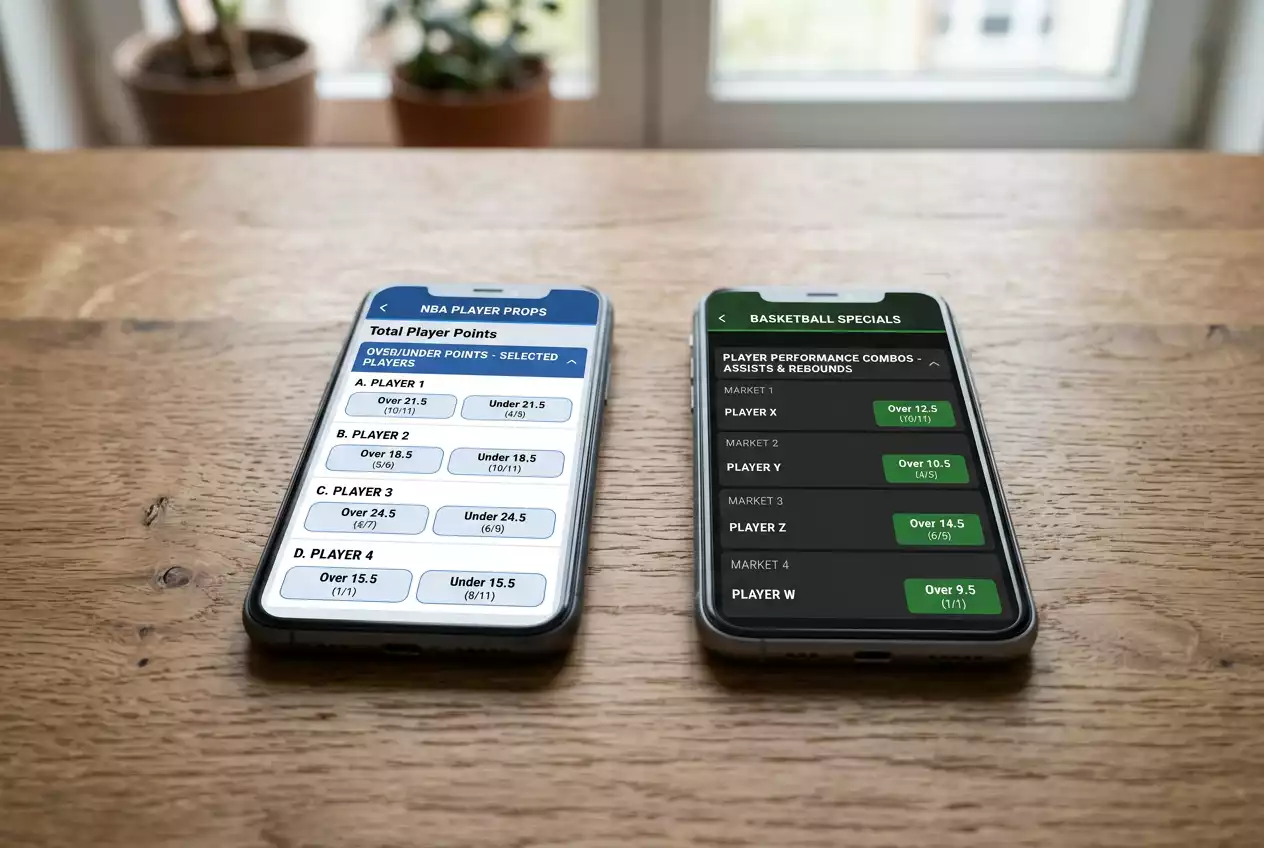
The first to go were the lowest-volume single-event props. First basket, first three-pointer, first turnover, first foul drawn — markets that depend on a single moment and can be tilted by a single decision. Several UK books pulled them from regular-season NBA listings in October and November 2025, restored some after risk reviews, and left others off the menu entirely. The pattern of which markets UK books quietly pulled tracks more granularly with operator-specific changes.
Limits tightened on the surviving micro-props. Where a book might previously have accepted a £200 bet on a player’s first-basket prop without flinching, post-Rozier the same market often capped at £20 or £50, with manual review on anything above. The integrity teams I have spoken to describe this as the “low-volume tax” — the reduced limits are not punitive, they are a function of the harder time books have hedging or laying off small markets when activity spikes.
Player props on availability — over/under on minutes played, started/did not start markets — moved closer to a “settle on official confirmation” rule. The window for late-scratch news to disrupt a bet narrowed, with several operators codifying that any bet placed within the final hour before tip-off carried explicit injury risk that would not void the wager.
The standard player props menu — points, rebounds, assists, threes, steals — survived intact. UK books still offer all of them. They watch them more carefully than they used to.
Has Terry Rozier been convicted at the time of writing?
No. The federal indictment was filed in October 2025 and the case is ongoing. An indictment is an allegation, not a verdict. Rozier has the same presumption of innocence as any defendant until a court rules otherwise.
Did UK books offer any of the markets in question?
Yes. Player points, rebounds and assists unders are standard offerings on UK-licensed sportsbooks for any NBA game. The specific allegations in the Rozier case relate to U.S. operators, but the same market types are listed every night across the UK menu.
Markets Survive on Trust They Have to Earn
The Rozier indictment is one chapter in a longer story that has not finished writing itself. There will be more cases. There will be more headlines. The NBA’s relationship with regulated sports betting is not going back to the pre-2018 era, and neither is the UK’s relationship with US-style player props.
What the case has done is reset a few assumptions for everyone in the chain. Players cannot assume their pre-game decisions are private. Bettors cannot assume markets that look ordinary are immune to manipulation. Sportsbooks cannot assume their integrity systems are fast enough. Regulators cannot assume the existing rulebook covers the next variant. Each of those resets, taken together, is what produces the menu I see when I open a UK app today — leaner in some places, faster to settle in others, watched more carefully throughout. That is the visible legacy of a single March 2023 game.
Published by the nba Props Betting team.