NBA Prop Void Rules: Injuries, Minimum Minutes and What Gets Refunded
 Available in US

Why Settlement Pages Are the Most Underread Document on a Site
I’ve placed thousands of NBA prop bets across the years. The first time I read a UK sportsbook’s full settlement page front-to-back, I was four years into the hobby. Until then I’d been operating on the rules I assumed were standard — over wins if the player exceeds the line, stake returns if he doesn’t play, and somewhere in the middle there were probably edge cases. There were. They cost me bets I didn’t expect to lose and refunded bets I didn’t expect to win, and once I read the actual rules I understood why.
The settlement section of a UK sportsbook’s NBA prop terms is one of the least-read documents in the entire betting industry. Most bettors never open it. The pages are dry, legalistic, and run to thousands of words across the full prop catalogue. But they’re also the document that decides whether your bet wins or loses in any non-standard situation, and “non-standard” happens more often in the NBA than in most other sports because of the league’s high rate of late scratches, in-game injuries and load-management decisions. If you’re betting NBA props with any volume, the settlement page is mandatory reading. If you’re not reading it, you’re betting blind in the cases that decide most of your slips.
The Default Void Behaviour Across UK Books
The starting point that’s roughly consistent across UK-licensed sportsbooks is the void rule for player props on a player who doesn’t take the floor. If a player is ruled out before tip-off and records zero minutes, the standard treatment across UK books is to void the bet and return the stake. This is the rule most casual bettors do know, and it’s the right rule to expect as a baseline.
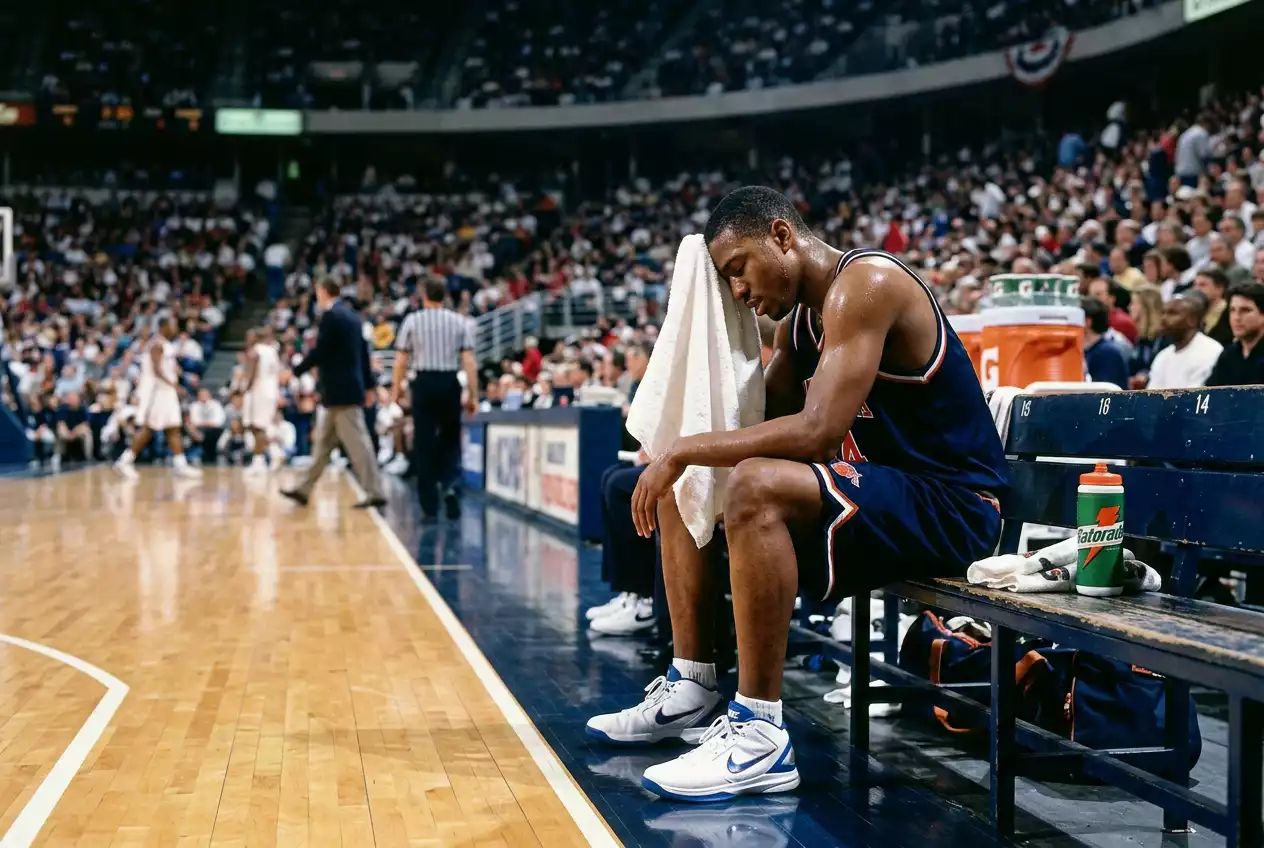
The complications start within the game itself. If a player takes the floor and exits early due to injury — say, in the first quarter, before reaching whatever minimum-minutes threshold the book applies — the prop generally voids and the stake returns. Most UK books treat the in-game injury as functionally equivalent to a pre-game scratch from a settlement perspective, with some operators applying explicit minimum-minutes thresholds and others using a softer “good-faith” standard.
The exact threshold matters. Some books use a fixed minimum — a player must record some specific number of minutes for the prop to stand — while others use an implicit “the player must have had a meaningful chance to reach the line” standard that the operator interprets in good faith. The fixed-threshold operators are easier to predict but the soft-threshold ones occasionally produce surprising decisions either way. Reading the specific operator’s rules before placing the bet is the difference between knowing what you’re betting on and finding out post-game.
Where the rules tend to diverge most across UK books is on partial-game injuries to players who exited beyond any minimum threshold. If a player records 22 minutes and goes 14-of-19 from the field for 28 points, exits in the third quarter and finishes with 28 points, the standard treatment is “bet stands” — the player had ample opportunity, the over hit, and the early exit doesn’t change the outcome. But the language varies enough across books that the settlement details for any specific case need to be checked against the specific operator’s terms.
Minimum Minutes and “Bet Stands” Triggers
The minimum-minutes threshold is the variable that decides most of the genuinely confusing cases. The principle is simple: if the player took the floor for long enough that the book considers him to have had a fair shot at the prop line, the bet stands regardless of whether he ultimately hit it. Below that threshold, the bet voids.
The thresholds aren’t standardised across UK books. Some operators apply a low minimum — five or six minutes — beyond which any prop is in play. Others apply a higher minimum more aligned with what you’d intuitively call a meaningful playing-time sample. A handful of operators have stat-specific thresholds, with rebound props requiring a different minimum than points props because a player needs more floor time to plausibly reach a rebound line than a points line in similar circumstances.
The “over has already cleared” case is the cleanest exception. If the player has hit the over before the injury occurs — say, the line is 22.5 points, the player has 24 by the time of the injury — most UK books settle the over as a winner regardless of whether the player returns to the floor. The logic is that the bet’s outcome was determined before the injury, and voiding the bet would feel arbitrary to the bettor. But this is exactly the kind of case where settlement language matters, because not every operator handles it the same way.
The trickier case is the partial-clearance one. If the line is 24.5 points and the player has 22 at the time of injury, the bet hasn’t cleared yet but it’s plausibly close. Some books void on the basis that the player didn’t reach the threshold; others apply a minimum-minutes standard and let the bet stand or fail based on the final box score. The safest assumption when betting an over on a player with any injury risk is that the line needs to clear before any potential injury, not after, because even the books that handle partial-clearance cases generously have language that gives them latitude to void.
When Over Has Already Hit Before the Injury
The cleanest scenario in this whole topic is one I want to cover in detail because it’s the case where bettors most often expect a void and most often don’t get one. If the over has cleared before the injury happens, the bet typically pays as a winner under most UK sportsbook rules. The player had the opportunity, took it, exceeded the line, and the subsequent injury is irrelevant to the settlement.
The mechanics are straightforward. A points line of 22.5 is decided by whether the player reached 23 points or higher at any point in the game. If he did, the over wins. If he didn’t, the over loses. The injury question only enters the picture when the player exits before the line could plausibly be reached, in which case the void rules apply. Once the line has been crossed, the question of whether the player continued to play is no longer relevant.
This is good news for over-bettors specifically. The structure of the rules doesn’t penalise an over-bet for an injury that occurs after the line has cleared. The book can’t use the injury as a reason to void a bet that was already won — that would be a different and substantially worse class of operator behaviour, and it’s not the standard at any UKGC-licensed sportsbook.
Under-bettors face the symmetrical case but the rules don’t always work as cleanly in their favour. If the line is 22.5 and the player has 8 points when he exits in the first quarter due to injury, the under hasn’t been “decided” in the same way an over crossing the line was decided — the player was on track for a higher number, and the injury cut his game short. The standard UK treatment in this case is to void the bet and return the stake, not to treat the under as a winner. The reasoning is that the player didn’t have a fair shot at the line, so the outcome is artificial. Under-bettors who expect to be paid when injuries cut a player short of a line they hadn’t approached are usually disappointed.
Where UK Books Differ on Edge Cases
The cases where books diverge meaningfully are mostly the marginal ones, and that’s where the settlement page reading actually pays for itself. A few patterns are worth knowing about even if you can’t memorise them across every operator.
The first divergence is on the late scratch versus pre-game-warm-up scratch. A player ruled out 30 minutes before tip-off is uniformly treated as a scratch, prop voids, stake returns. A player ruled out two minutes before tip-off because of a warm-up tweak is also uniformly treated as a scratch. The grey area is the player ruled active on the official inactive list but who never actually takes the floor — a coach’s-decision DNP that wasn’t on the injury report. Some books treat this as a void; others treat it as “the player was available” and apply the minimum-minutes rule, which would mean the prop voids on zero minutes the same way an injury scratch would. The outcomes match across most UK operators but the language differs, which matters in marginal cases.
The second divergence is on bet builder legs involving an injured player. If a builder includes three legs and one leg involves a player who scratches, the standard UK treatment is to void that leg and recalculate the builder odds across the remaining legs. But the recalculation method varies — some books recalculate cleanly to the new combined odds, others apply an internal price model that produces a different number than a manual recalculation would suggest. The differences are usually small, but they exist, and they matter when the builder is close to the threshold of being worth placing in the first place.
The third divergence is on overtime treatment of player props in injury cases. A player who exits in the third quarter with the over already hit but the line being a “prop including overtime” formulation — most UK player props do include OT by default — has typically already won regardless of the OT scenario. But the language matters when the prop is the rarer “regulation only” formulation. Reading the operator’s specific rule on overtime inclusion is part of reading the settlement page, and it’s a piece of the puzzle the wider read on overtime in NBA prop markets picks up in detail.
Void Rule FAQ
Two questions about NBA prop void rules come up most often when I help friends parse what just happened to a bet they expected a different outcome on.
If a player plays one minute and exits, does the prop void?
At most UK-licensed sportsbooks, yes. One minute is well below any reasonable minimum-minutes threshold for player props, and the standard treatment is to void the bet and return the stake. The exact minute count varies by operator — some apply a fixed five-minute or ten-minute floor, others use a softer ‘meaningful playing time’ standard — but anything in single-digit minutes from a player who exited due to injury would void at virtually every UKGC-licensed book. The exception is if the over had already cleared in those first few minutes, which is rare on most stat lines but does occasionally happen on threes-made props for high-volume shooters.
Can a UK book settle the same prop differently than its competitor?
Yes, on edge cases. The standard situations — full game played, clean injury scratch, in-game injury before any reasonable threshold — produce consistent outcomes across UK books because the underlying logic is universal. But marginal cases like partial-clearance lines, late lineup changes that aren’t on the official injury report, or bet builder legs involving injured players can settle differently across operators because the underlying rules language differs. Two bettors can place identical bets at two different UK books, see identical in-game events, and receive different settlement outcomes. The fix is to read the specific operator’s rules before placing the bet, especially on builders and on injury-prone players.
Read the Rule Before You Confirm
The principle that should sit above every UK NBA prop slip is the same one that should sit above every contract anyone signs: read the rules before you commit. The settlement pages are tedious. They run for thousands of words. Most bettors will not read them through, and most bettors will eventually get a settlement they didn’t expect.
The compromise I’ve ended up with is to read the settlement page once, fully, for each operator I bet with, and then re-read it whenever it’s updated. The full reading takes maybe twenty minutes the first time. The re-reads when the rules change take five. That investment of time has paid for itself many times over in the form of bets I didn’t place because I knew the void rule would catch them and bets I held confidently because I knew exactly how the operator would settle the case. The settlement page is the most underread document on a sportsbook site. It’s also the one that most often decides whether your slip wins or loses in the cases that aren’t clean. Read it once. Bet better forever.
Written by the editors at nba Props Betting.