How to Verify a UK Gambling Commission Licence in 60 Seconds
 Available in US
The Single Pre-Registration Check Most Bettors Skip
A friend of mine signed up to a sportsbook last summer because he saw an aggressive price-boost campaign on a basketball promotion that looked like genuine value. Six weeks later, he was trying to withdraw a winning bet and getting nowhere. The site looked professional. The branding was credible. The customer service emails sounded reasonable. None of it mattered, because the operator did not hold a UK Gambling Commission licence and the protections he assumed were standard simply did not exist.
The UK has an enormous regulated gambling sector — 1,786 active operators and 8,234 licensed gambling premises across the country as of the most recent annual report. The infrastructure for verification is comprehensive and free to use. Sixty seconds of work on the UKGC public register, before signing up to any sportsbook, distinguishes a regulated operator from a lookalike that has none of the consumer protections most UK bettors assume come automatically with the package.
This piece walks through the public register, decodes what the components of a licence number actually mean, lists the red flags worth recognising at a glance, and explains the complaints route when something does go wrong despite the licensing layer.
Walking Through the UKGC Public Register
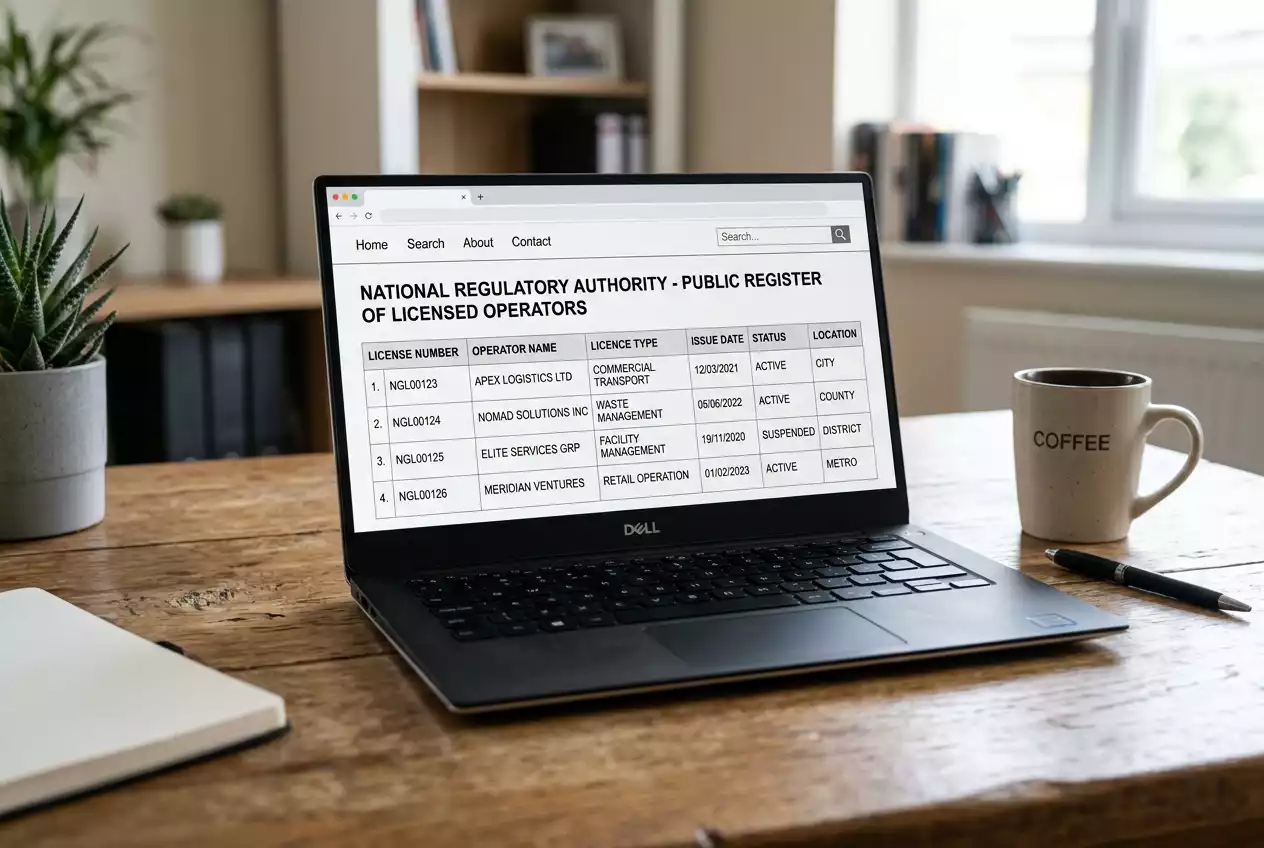
The UK Gambling Commission’s public register is at gamblingcommission.gov.uk and is searchable by operator name, licence number, or trading name. The interface is plain by design — the regulator is not running a marketing site, it is running a record of regulatory truth, and the visual minimalism reflects that.
The most common search starting point is the operator’s brand name. Type “bet365” or “Ladbrokes” or “Sky Bet” into the public register and the system returns the matching corporate entity along with all its licensed activities. The register lists the legal entity holding the licence, the trading names that entity operates under, the licence numbers issued, the activities each licence covers, and the current status of each — active, suspended, surrendered, or revoked.
The trading name distinction matters. A single corporate entity often operates multiple consumer-facing brands. The Flutter group, for example, holds licences that cover Sky Bet, Paddy Power and Betfair. The register lets you trace which corporate entity is actually responsible for the brand you are using, which is useful both for understanding ownership structures and for confirming that the brand is genuinely covered under a UKGC licence rather than being an unauthorised lookalike.
The activity categorisation is also worth looking at. UKGC licences cover specific gambling activities — remote sports betting, remote casino, retail bookmaking, and so on. A sportsbook that holds a casino licence but not a sports betting licence is not authorised to take sports bets in the UK. Most major UK operators hold the full range of relevant licences for the activities they offer, but the categorisation matters when verifying smaller or newer brands.
The status field is the headline check. An “active” status means the operator is currently authorised to operate the listed activities under UKGC supervision. Anything other than active — surrendered, suspended, expired, revoked — is a red flag that warrants further investigation before depositing money.
What Each Part of a Licence Number Means
UKGC licence numbers are structured rather than arbitrary. The format is a series of digits separated into segments, and each segment encodes information about the type of licence and the specific authorisation granted. Reading a licence number gives you context that the headline operator-name lookup does not always surface.
The first segment of a typical UKGC licence number identifies the operator account — the corporate entity that holds the licence. The next segments identify specific authorisations under that account, with each numbered authorisation corresponding to one or more activities. An operator with multiple authorisations may hold separate numbered licences for remote sports betting, remote casino, retail betting and other activities.
The visible licence number on a UK sportsbook’s footer typically corresponds to the specific authorisation under which the consumer-facing service operates. A footer that reads “Licence No. 39028” tells you which specific authorisation is in play, which lets you verify that authorisation directly against the public register rather than relying on the brand-name lookup alone.
The reason this matters is white-label operations. A “white-label” sportsbook is one that operates under another operator’s licence — the consumer-facing brand is one company, but the regulatory licence is held by a different company that provides the underlying technology and regulatory cover. White-label arrangements are entirely legitimate and common in the industry, but they mean the brand you think you are dealing with may not be the regulatory entity that would be responsible if something went wrong. Decoding the licence number tells you which entity is actually on the regulatory hook.
This level of detail is rarely necessary for major UK brands. It becomes much more useful when evaluating newer or less prominent operators, particularly those running aggressive promotional campaigns. A brand that does not surface a clean ownership structure on the public register is a brand that warrants caution before sign-up.
Common Red Flags and Look-Alike Sites
The look-alike problem is real and worth understanding clearly. A site that uses an operator brand’s colour scheme, layout style, and even slightly modified domain name can look identical to the legitimate operator at a glance. The differences that distinguish the two are the things most bettors do not check before depositing — the actual domain name, the regulatory footer, and the licence number’s match against the public register.
The first red flag is a domain name that uses a slightly different spelling, top-level domain, or word order than the legitimate operator’s known domain. “bet365.co.uk” is the legitimate UK operation; variations on that pattern with extra hyphens, alternative TLDs, or modified spellings should be assumed to be unauthorised until proven otherwise. The clean check is to navigate directly from a bookmark or from the UKGC public register’s listed website rather than from a search result or promotional link.
The second red flag is missing or incorrect regulatory footer information. UK-licensed operators are required to display their UKGC licence number, the name of the corporate entity holding the licence, and the regulatory address. A site missing this information is, by definition, not displaying what UK regulation requires. A site that displays it but with a number or entity name that does not match the public register is showing fabricated information.
The third red flag is unrealistic promotional offers. Welcome bonuses substantially out of line with the UK industry norm, free-bet structures with terms that no UK operator would offer, or promotional language that promises returns rather than describing offers — all of these correlate strongly with operations outside the UK regulatory perimeter. Sports betting marketing has well-documented effects on younger gamblers, with peer-reviewed research indicating that betting incentives can contribute to intensification of gambling behaviour in vulnerable populations. The aggressive promotional posture of unauthorised operators is part of how that mechanism plays out in practice.
The fourth red flag is a payment processing setup that does not match standard UK norms. Operators that route deposits through obscure payment processors, demand cryptocurrency, or refuse standard UK banking integration are typically operating outside the regulatory perimeter. Major UK-licensed operators integrate cleanly with all the standard UK banking instruments. Friction at the deposit step is information.
Where to Take Complaints If Things Go Wrong
The UKGC framework includes specific complaint and dispute resolution paths that are unavailable outside the regulated perimeter. The first stop for any complaint is the operator’s own complaints process, which UKGC-licensed operators are required to maintain to specified standards. If the operator’s process does not resolve the issue, the bettor escalates to the Alternative Dispute Resolution provider that the operator has nominated — typically IBAS (Independent Betting Adjudication Service) or a comparable approved body.
The ADR provider issues a binding decision on the operator under the UKGC regulatory framework. The bettor’s complaint is heard by an independent body with regulatory force behind its findings, which is meaningfully different from anything available outside the UKGC system. The decision is enforceable through the UKGC’s licensing oversight if the operator fails to comply.
The UKGC itself does not typically intervene in individual disputes — it handles regulatory matters at the operator level rather than at the consumer-claim level. But UKGC complaints feed into the regulator’s enforcement priorities, and patterns of consumer complaints against a specific operator can trigger regulatory action including licence reviews or suspensions. The broader UK responsible-gambling framework sits alongside this dispute infrastructure as part of the protections UKGC licensing carries.
None of this exists for operators outside the UKGC framework. A dispute with an unauthorised operator has no regulatory enforcement layer, no ADR escalation path, and no realistic legal recourse for most UK consumers. The infrastructure that makes UKGC-licensed sportsbooks workable — even when individual complaints arise — is what makes the licensing check at the start of the relationship genuinely valuable.
Are sportsbooks with overseas licences legal for UK residents?
Strictly speaking, an operator providing remote gambling facilities to UK consumers is required to hold a UKGC licence regardless of where the operator is based. An overseas-licensed operator that accepts UK customers without a UKGC licence is operating outside UK regulation, which means the regulatory protections discussed in this piece simply do not apply. UK residents can technically access overseas-licensed sites, but doing so forfeits the consumer protections built into UK regulation and creates dispute resolution and recovery problems if anything goes wrong.
What does it mean if an operator’s licence is ‘suspended’?
A suspended licence means the UKGC has paused the operator’s authority to provide gambling services pending a regulatory matter, typically pending an investigation or compliance review. During suspension, the operator is not permitted to take new bets or accept new customers. Existing customer balances should still be honoured under regulatory oversight, but withdrawals and account access can be disrupted. A suspended status is a strong indicator to avoid signing up; for existing customers, contact the operator promptly and document any issues with the UKGC.
Sixty Seconds That Save Months
The single pre-registration check on the UKGC public register is the most cost-effective protection a UK bettor can build into their habits. Sixty seconds before the first deposit on any new sportsbook, comparing the operator name and licence number on the public register, prevents the small share of disastrous outcomes that genuinely threaten a bettor’s bankroll and time. The major UK brands all check out cleanly, which is most of the time the work needed. The newer or less familiar brands are exactly where the check matters most. The infrastructure is free, fast and decisive — declining to use it is the choice that produces the stories of withdrawals that never came.
Created by the ”nba Props Betting” editorial team.