Line Shopping NBA Props Across UK-Licensed Sportsbooks
 Available in US
The Single Habit That Adds the Most Long-Run Value
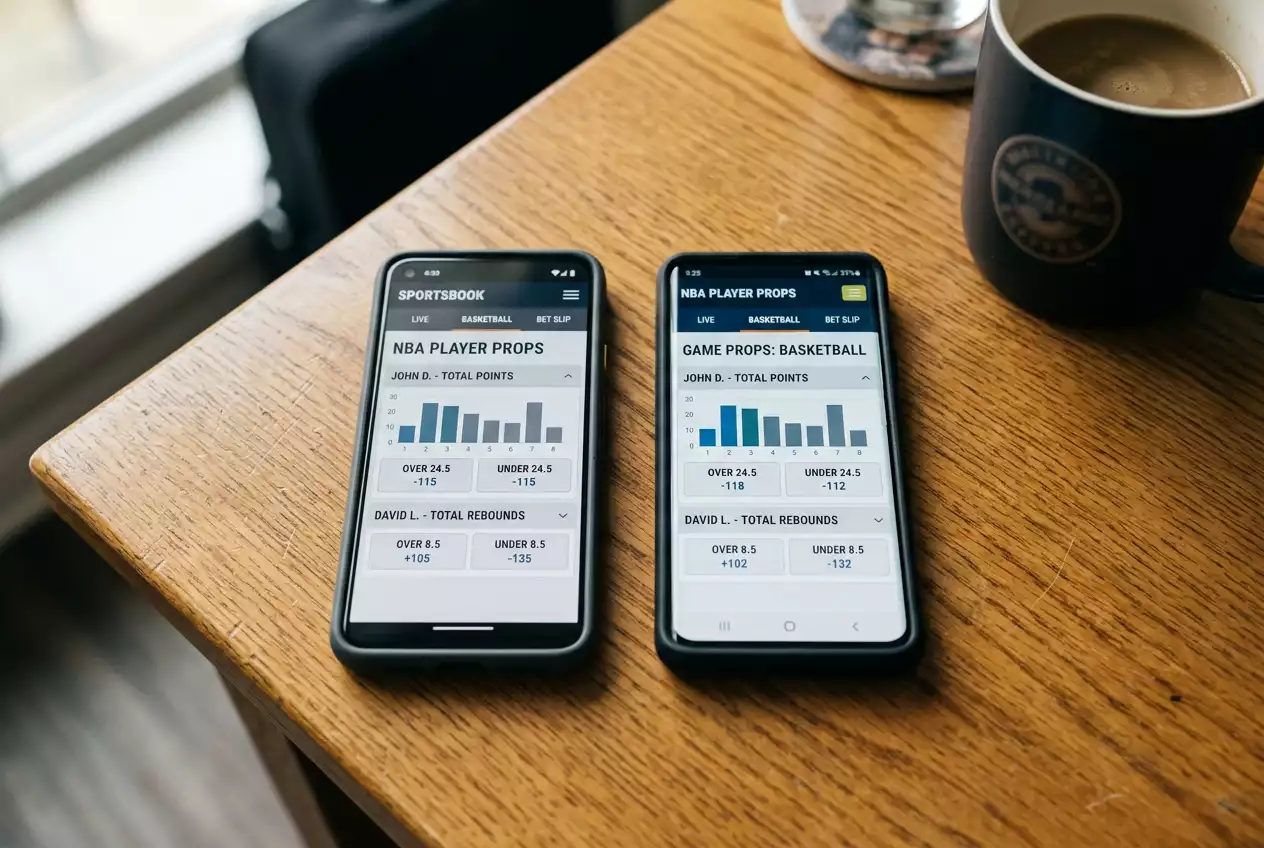
Six minutes. That is roughly how long it took me one Tuesday evening to find a points-prop priced at decimal 1.95 on one UK book and decimal 1.83 on another, on exactly the same player at exactly the same line. The bettor on the 1.83 side was paying about 6.5% more for the privilege of the same bet. Over a year, the cumulative tax on bettors who never shop is staggering.
Line shopping — the habit of checking two or three UK-licensed operators before placing any bet — is the single highest-return discipline in NBA prop betting that does not require a model or any predictive skill. It is pure arithmetic. The same bet at a better price is, by definition, a better bet. The bettors who do it most consistently are the ones whose long-run results look least like luck and most like the slow accumulation of small advantages.
This piece walks through why prices differ across UK books, a practical two-tab routine for shopping in real time, why closing line value is the right scoreboard for whether your shopping is working, and the regulatory boundary that defines where UK bettors should be doing all of this.
Why Prices Differ Even on Identical Markets
The first instinct most bettors have when they spot a price gap is suspicion — “the better price must be wrong somehow”. It is almost never wrong. Prices differ across UK books for boring, structural reasons that have nothing to do with anyone making a mistake.
The first reason is risk position. If a book has taken heavy action on the over of a player’s points prop, it can move the line up to encourage under bets and rebalance the book. Another book that has not seen the same imbalance has no reason to move. The result is two operators offering meaningfully different prices on the same market because they have different inventory.
The second reason is upstream pricing. Different UK operators feed off different market-making providers, and those providers themselves sit at different points in the global pricing chain. The Sportradar feed, the IMG Arena feed, in-house traders at the larger operators — all of them produce slightly different views of fair value at any given moment, and the lag between price updates produces visible differences across menus.
The third reason is acquisition strategy. The UK Sports Betting PPC space shows just how aggressive the competitive layer is — Ladbrokes ran 36.8% click share in April 2026 with Sky Bet at 23.85%. Books fighting for the same bettors will sometimes price specific sports more aggressively than others to win attention. NBA props are not the highest-margin category for most UK operators, and a book that wants to grow its NBA segment will price tighter on the headline markets to attract the bettor segment that cares about NBA.
The fourth reason is plain inertia. Some books update prop prices on a tighter cycle than others. A book that refreshes every five minutes will not show the same line as a book that refreshes every twenty when the underlying market moves. None of this is exotic. All of it produces the gaps that line shoppers exploit.
A Practical Two-Tab Routine
The shopping discipline does not require a fancy tool. It requires two browser tabs, two app installs, or one of each. The routine I run when I have a bet in mind is consistent: identify the market, check the price on my main book, check the price on a designated second book, take the better one if both meet my edge threshold.
The structure works because it is fast. Two-book shopping takes under a minute per bet once you have done it a few times. Three-book shopping takes about twice as long and adds maybe one in twenty bets to my daily volume — the marginal benefit drops off quickly past two operators on standard NBA prop markets, although it can be worth more on exotic markets where pricing is thinner. Four-book shopping is what some professionals do; for the bulk of UK recreational bettors, two is the right number.
The key constraint is that you bet on whichever book showed the better price at the moment of decision, even if the worse book is the one with your headline balance. The bettor who logs into two apps and then picks the worse price because the better one is not “their main book” is doing the work without claiming the reward. Move the money to follow the price. UK regulated operators all support deposits and withdrawals to the same banking instruments, and the friction of moving £100 between two accounts is genuinely small once you have set both up.
I keep my shopping rotation to a two-book primary plus one secondary I check on bigger bets. The two primaries cover most of the price-distribution range I see; the secondary catches occasional outliers. That structure has been stable for me through two NBA seasons, which is roughly the validation period anyone should aim for before changing their shopping rotation.
Closing Line Value as a Scoreboard
The right way to know whether your shopping is actually working is closing line value. CLV is the difference between the price you took and the price the same market closed at just before tip-off. If you backed an over at decimal 1.95 and the market closed at 1.85, you got the better of the closing line by a meaningful margin — your CLV is positive. If you backed at 1.85 and the market closed at 1.95, you got the worse of the closing line — your CLV is negative.
The reason CLV matters is that it correlates strongly with long-run profitability across enough sample size. The closing line is the most efficient version of the market — it has absorbed the most information and the most action — and consistent positive CLV is the single best leading indicator of whether your bet selection process is genuinely sharp. The SheKicks framing of expected value is the right one — calculating EV requires multiplying probability by payout and seeing whether the total is positive, and CLV is the empirical version of that calculation across actual bets.
Tracking CLV requires recording two prices for every bet — the one you took and the one the market closed at — which sounds more painful than it is. A spreadsheet column for “price taken” and “price closed” produces the data automatically once both numbers are in. Most experienced bettors I know track CLV by month and pay close attention to any quarter in which their CLV trends negative — it is a leading indicator that something in their selection process has stopped working before the bankroll itself shows the strain.
Line shopping and CLV are mechanically related. Better shopping produces higher CLV by definition, because the better price you took is more likely to be at or above the closing line. The cumulative CLV across a season is the best summary statistic for whether your shopping discipline is actually adding the value the maths says it should.
Why UK Bettors Should Stay on UKGC Licences
The boundary on all of this is the regulatory one. The UK has 1,786 regulated operators and 8,234 licensed gambling premises as of the most recent annual report — a deep ecosystem of UKGC-licensed books that gives any UK bettor plenty of legitimate options to shop across. The temptation to chase prices on offshore unlicensed sites is real and almost always a mistake.
UKGC-licensed operators carry obligations on dispute resolution, deposit protection, responsible gambling tools and complaints handling that offshore books simply do not. When something goes wrong — a delayed withdrawal, a mis-settled bet, a frozen account — the UKGC framework gives bettors a route to escalation that has actual force behind it. Offshore books may quote better prices on a given market, but they offer none of the consumer protection that makes a UK-licensed sportsbook a viable long-term home for a bankroll. Line shopping inside the UKGC perimeter is an exercise in optimisation; line shopping outside it is an exercise in trust falls. A practical walkthrough of one major UK operator’s NBA offerings is the kind of content that helps bettors understand which UK books are worth keeping in their shopping rotation.
Is multi-account use across UK books allowed?
Yes. Holding accounts at multiple UK-licensed sportsbooks is entirely legitimate and is in fact the foundation of any line-shopping practice. Each operator handles your account independently. The constraints to be aware of are the operator-specific rules on bonuses and free bets — most have policies preventing the same bettor from claiming the same promotion across multiple accounts at the same operator group, but holding accounts at unrelated operators is not restricted.
How do UK bookmakers handle ‘best odds guaranteed’ on NBA props?
Best odds guaranteed is overwhelmingly a horse-racing promotion in the UK and is rarely extended to NBA player props as a standing offer. Some operators run occasional NBA-specific price-boost promotions that approximate the same idea — taking an enhanced price on a specific market — but these are time-limited rather than systematic. The line-shopping approach in this piece does not depend on any best-odds-guaranteed promotion; it works off the underlying price differences across operators.
Half a Cent Compounds
The reason line shopping works as a long-run discipline is that the gains compound across volume. A 1% improvement in average price taken across a thousand bets in a season is a meaningful number on any bankroll. Line shopping is not glamorous and it does not produce the satisfaction of a sharp model call, but it is the steadiest source of additional value any prop bettor can build into a routine. The bettors I trust most on long-run performance are not the ones with the best picks. They are the ones who never place a bet without checking a second screen first.
Prepared by the nba Props Betting editorial staff.