Positionless NBA Basketball: Lineup Data for Prop Bettors
 Available in US
Table of Contents
NBA Lineup Data: Beating Misleading Position Stats
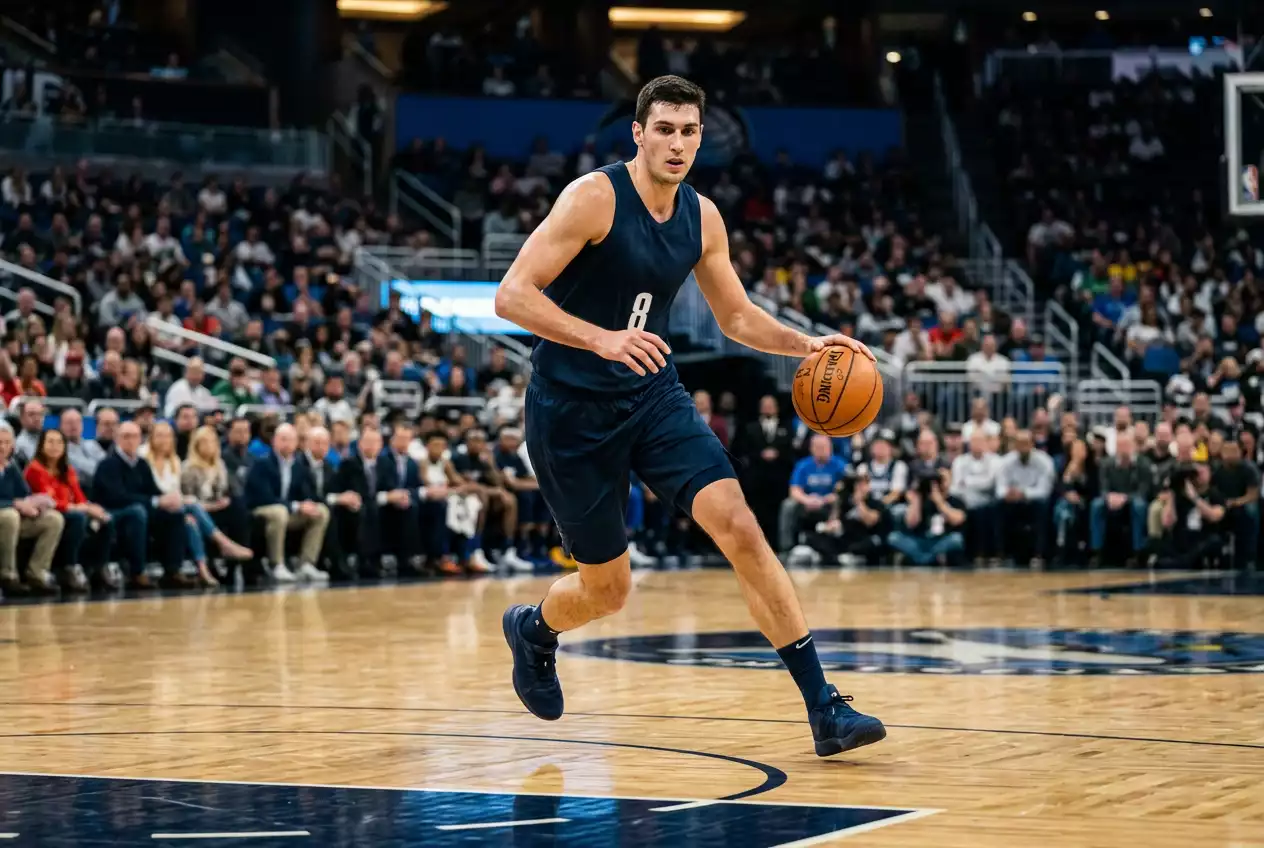
The first time I tried to build a clean prop projection model, I ran into a problem I couldn’t reconcile with the data structure I’d set up. I had columns for position, opponent DvP at that position, projected minutes and projected usage. Then I went to project a points line for a 6’8″ lead guard who was officially listed as a PG but who, on most nights, ran sets through whichever defender was the worst on the floor — usually a 4 in switch-heavy schemes.
The spreadsheet wanted me to look up his points-line projection against opposing PG defence. The reality on the floor was that he was being guarded by a power forward for two-thirds of his minutes. The model gave me a number. The number was wrong. Not slightly wrong — meaningfully wrong, by enough to flip an over into an under or vice versa.
That experience taught me something I should have figured out faster: the position labels in modern basketball are administrative leftovers, not playing-time facts. A serious prop bettor has to deal with this directly, because the metrics that matter — DvP, on/off splits, defensive rating against position — were all built on the assumption that positions mean something. In 2025-26 they often don’t.
Because traditional roles are blurring, bettors should be cautious when relying strictly on outdated defence vs position statistics.
Where Positionless Basketball Came From
The shift didn’t happen overnight, and it’s worth understanding the history because the history explains why prop models still struggle to keep up. The traditional five-position model came out of the late 1980s and 1990s, when NBA rosters were genuinely structured around specialised slots — a true point guard who didn’t shoot, two wings who did, a power forward who rebounded and a centre who guarded the basket. Roles were narrow and matchups were predictable.
The first crack in that model was the rise of the stretch four in the early 2010s. Suddenly the power forward could shoot from distance, which broke the standard help-defence rotations. The next crack was the small-ball five, where the centre slot got filled by a 6’7″ forward who could switch onto guards on the perimeter. By the late 2010s the league had moved toward what coaches started calling “switch-everything” defence, which only worked if every defender on the floor could plausibly cover every offensive player.
By 2025-26 the standard playoff lineup runs three or four players who can each handle the ball, attack a closeout and switch onto multiple positions. The “true centre” archetype still exists — a handful of teams build around one — but most contenders now play a configuration where the position labels on the lineup card describe rosters, not roles. This is the basketball that prop bettors are pricing every night. The position-tagged metrics were built for a different sport.
What This Does to Position-Tagged Stats
Two metrics get distorted in ways prop bettors should care about. The first is DvP, which I’ve already covered enough that I’ll keep this short — when the position label doesn’t match the matchup, DvP is reading a different question from the one your bet is actually answering. A “soft vs PG” defence might be soft because they get torched by traditional point guards. The 6’8″ lead guard tonight is going to be guarded by their wing, who’s their best defender. The DvP rank tells you something. It just doesn’t tell you the thing you need.
The second metric that gets distorted is opponent shooting volume by position, which most rebound-prop projections rely on. If you’re projecting how many rebound chances your centre will have, you’re typically modelling how many shots will come up short from the opposing offence. In switch-heavy basketball the shots come from less predictable places — a stretch four shooting from the wing, a small-ball lineup shooting almost exclusively from outside. The rebound distribution that follows is messier, and the centre’s expected boards are harder to project from positional data alone.
There’s also a third effect that’s subtler. Foul rates change in switch-heavy schemes because perimeter defenders are guarding bigger players and getting beaten on size mismatches that lead to fouls. Free-throw props on stars who can hunt switches go up. Free-throw props on the switch-eaten defenders go up too, and on the defensive end. Foul-trouble effects then knock those defenders’ minutes down, which shrinks the offence-to-bench projection of his counterpart on the other team. The chain reaction breaks every model that doesn’t see the lineup data directly.
Reading Lineup Data Instead of Roster Slots
The fix isn’t to throw away position-based metrics — it’s to layer lineup data on top. Lineup data tells you who shared the floor with whom, for how many minutes, with what offensive and defensive results. The most useful read is “who guarded whom” tracking, which several public analytics tools now publish. Five-on-five tracking is even better because it shows how many of a player’s minutes were spent in lineups with a specific defender as the closest opponent.
What I look for, on a switch-eaten lineup, is two things. One: does the player I’m betting tend to draw a specific defender across recent matchups against this opponent, or does he get rotated? Two: what’s that defender’s recent on-ball defensive rating, and is he in the lineup tonight? If the answer to the second question is “no, he’s resting”, a star whose points line looked steep against this opponent on paper might suddenly look very approachable.
The other lineup signal worth tracking is the closing lineup. Most prop totals are won or lost in the last 12-15 minutes of the game. The lineup the coach trusts in close games is rarely the one in the box-score average — it’s the most switchable five, the unit that can defend in tight situations. If your player is in that closing lineup, his minutes projection is stable. If he isn’t, the projection has a fat lower tail that the official minutes-played-per-game number doesn’t show.
Where Positionless Play Creates Prop Value
Positionless basketball isn’t just a problem for projections. It also creates prop opportunities that traditional models miss, and these are where I’ve found the steadiest edges over the last two seasons.
The first edge is the hybrid forward whose DvP is being read off the wrong column. If a 6’7″ combo forward is officially listed as a SF but spends 70% of his minutes at the 4, the books that lean on positional matchup data are pricing his points line against opposing SF defence. The actual matchup is the opposing PF defence — which might be a stretch shooter whose on-ball coverage is forgiving. The line gets set conservatively. The over clears.
The second edge is the small-ball centre whose rebound line gets set as if he’s a traditional 5. Switch-heavy lineups produce different rebound distributions — more long boards, more loose-ball scrambles — and a true 6’7″ centre often beats his projected rebounds because he covers more ground than a slower 7-footer. The line is set off historical big-man data. The actual rebound math has shifted.
The third edge, which I’ve started watching more carefully this season, is the secondary creator on positionless teams. When the offence runs through whichever player has the favourable matchup that night rather than through a fixed primary, the secondary creator’s usage on a given night can spike well above his season number. His assists line might be set at 4.5 because his season average is 4.2. On a night where his team has hunted his matchup, the assists number could plausibly be 7-8. The book is averaging across all the nights. Your bet is picking the specific one. For the underlying mechanics of how those positional matchups get summarised in the first place — and where the summary lies most loudly — the deeper read on defence vs position for NBA props is the companion to this one.
Positionless Basketball FAQ
Two questions on this topic land in my notebook more than any others, and they’re worth direct answers because the obvious answers are wrong.
Should I ignore DvP entirely for hybrid players?
No, but you should look at the column that matches the actual matchup, not the column that matches the roster label. If a hybrid wing is going to be defended primarily by an opposing PF tonight, the relevant DvP read is the opponent’s PF defence rank, not their SF defence rank. The fix takes 30 seconds — pull recent matchup data from the same two teams and check who guarded whom. The DvP is still useful. The label was just lying.
Which lineup-data sources are practical for UK bettors?
The free public analytics tools that publish five-on-five lineup data and opponent-tracking are the practical starting point — most basic on/off and matchup data is available without paywalls. For deeper opponent-by-opponent tracking, the major analytics platforms have free tiers that cover most of what a prop bettor needs. UK bettors don’t need anything special beyond a basic familiarity with where lineup data sits on these sites; the data is the same data professionals use, just with fewer real-time bells and whistles.
Forget the Five Slots, Read the Five on the Floor
The shift in how I think about prop projection happened the day I stopped asking “what position is he?” and started asking “who’s actually guarding him tonight?”. The questions sound similar. They produce different bets.
Adapt your betting models to the modern game by following the analytical breakdowns on our NBA Props Betting platform.
Positionless basketball isn’t going away. It’s going to become more entrenched as the next generation of players coming through college and the G-League grow up assuming the labels are administrative rather than functional. The prop models that adapt — the ones that lean on lineup data, on-ball matchup tracking and closing-five trends — will hold their edge against books that quietly do the same thing. The models that keep filing every player into a five-slot grid will keep producing bets that look smart on paper and lose on the floor. Modern basketball doesn’t fit five slots, and your projection shouldn’t either.
Created by the ”nba Props Betting” editorial team.