NBA Prime Video UK: Audience Growth and Viewership Data
 Available in US
Prime Video UK Viewership: NBA Media Cycle Stats
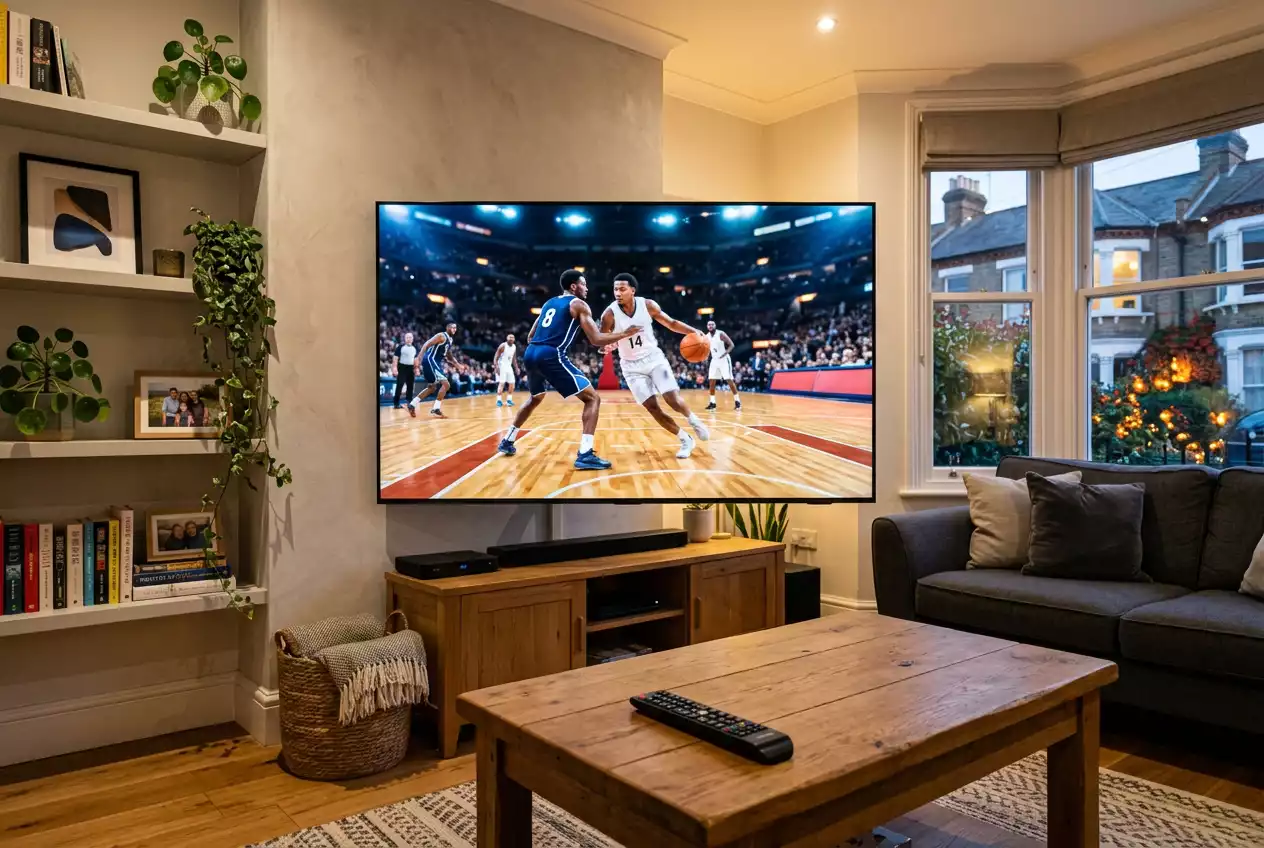
I remember the morning the press release crossed my inbox. Prime Video reporting 444% year-over-year growth in NBA viewership in the UK across the 2025-26 season — a number I had to read twice because the digit count was wrong relative to what sports growth normally looks like. Football, the dominant UK sport, grows in single-digit percentages most years. Even rugby’s biggest tournament cycles produce 30-40% spikes, not 400-plus.
That number isn’t a one-game blip. It’s the season’s trajectory across the regular-season slate Prime Video carried, controlled for the platform’s growing UK footprint. The London Game peak fed into it but didn’t manufacture it. The 444% is the kind of figure that changes how every commercial party in UK sport thinks about basketball — broadcasters, bookmakers, sponsors, everyone who plans around audience size in two-to-five-year horizons. For a prop bettor, the relevance isn’t the headline. It’s what the headline does to the operator product.
The Viewership Arc Since 2019
To understand the 444% you have to step back to where UK NBA viewership was sitting before the current cycle. Sky Sports had carried the NBA in the UK for years, building a small but durable audience of basketball fans who were comfortable staying up past midnight to watch live. That audience was real but limited — basketball was a niche product on a paid sports network, competing for attention with every other premium event in the Sky calendar.
The pre-Prime baseline matters. Sky Sports data suggested NBA viewership in the UK was up roughly 40% from 2019 levels even before Prime Video entered the picture, with the demographic skew running heavily toward audiences under 30. That growth was happening on legacy infrastructure — paid satellite, premium-tier sports — and it was a respectable but unspectacular curve.
What changed in the last two years was distribution. When Prime Video acquired NBA rights in the UK as part of the league’s broader media-rights cycle, the calculus for casual viewers shifted overnight. Households that already had Prime for shipping and the rest of Amazon’s video catalogue suddenly had access to live NBA games at no incremental cost. The friction that had kept NBA off the casual UK viewer’s radar — a separate sports subscription, a midnight-onwards viewing slot, a sport whose teams most British fans couldn’t immediately name — got reduced to “click on the NBA tile in the Prime Video app”. That distribution change is doing most of the heavy lifting in the 444% number.
The 90% increase in viewership for the 2026 London Game versus 2019 sits inside this arc. It’s not an outlier — it’s the live-event peak of a curve that’s been climbing across the regular-season slate. Each piece of the puzzle reinforces the others. Live events get audiences that build subscriber engagement; subscriber engagement gets translated into regular-season viewing; regular-season viewing creates the audience that’s there for the next live event.
Prime Video’s Live and Studio Strategy
The product Prime Video puts on the screen is a different kind of NBA broadcast from what UK fans had been used to on Sky Sports. The live game presentation is closer to a US-domestic Amazon broadcast than a UK-tailored show — the announcers are typically the American crew, the studio segments lean on US-based analysts, and the production tempo matches the pace of an American sports broadcast. For some UK fans this was a step back from the more locally-flavoured Sky coverage. For most, it didn’t matter — the casual audience that drove the 444% number wasn’t there for the analysis. They were there for the basketball.
The studio show that anchors the night’s coverage has been the variable Prime Video has worked on most aggressively. The format borrows from the NFL Thursday Night Football model that Amazon refined over previous seasons — a strong on-camera personality, a rotating analyst panel, branded segments that survive across nights to build viewer habit. The investment in that infrastructure has been visible. Whether the studio show is winning or losing UK viewers on its own merits is harder to measure, but the data from Amazon suggests it’s at least retaining audience between games rather than losing them.
The interactive product layered on top — alternative camera angles, live stat overlays, second-screen options inside the Prime Video app — represents a different bet entirely. Amazon has been testing what live sports looks like when it’s natively interactive rather than just televised. The results in the UK have been quietly positive. Younger viewers in particular use the second-screen features at higher rates than legacy sports broadcasts ever achieved, which feeds back into the engagement metrics that justify the audience numbers.
The $77 Billion Media Cycle Behind It
None of this happens without the media-rights deal underwriting it. The NBA’s domestic media-rights cycle, signed for the 2025-26 season onwards, is worth $77 billion across ESPN, NBC and Amazon. That number is the financial bedrock the international distribution strategy sits on, and it’s worth understanding because it tells you something about the league’s incentives going forward.
An $77 billion cycle is not a number you sign without a clear plan for international growth. The domestic American audience is mature — basketball viewership in the US has plateaued for several years and the financial growth from this cycle has to come from somewhere. International is the obvious answer, and the UK is the obvious gateway market for European expansion. The Prime Video deal is sized in part to drive that growth, and the league has financial incentives that align with making the UK product work — more games available to UK fans, more marketing investment in UK-relevant content, more international Global Games on the calendar.
For UK bettors and the operators who serve them, this matters because it’s a stable base. The 444% growth isn’t a fragile spike that depends on one rights deal that might or might not renew. It’s the early phase of a multi-year contractual cycle with a financial structure that rewards sustained investment in the UK audience. The product is going to keep getting better, more accessible and more locally relevant for at least the next several seasons. The 2026 London Game’s record-setting numbers — including the sell-out crowd that drove ticket-resale activity well beyond face value — fit naturally inside that wider trajectory.
The Subscription Layer Bettors Live In
The practical question for a UK bettor isn’t whether NBA viewership is growing — that’s settled. The question is what the subscription layer actually requires and how it interacts with the bettor’s daily routine.
Standard Prime Video access in the UK comes bundled with Amazon Prime, which most UK households already have for retail shipping. The live NBA games carried on Prime Video are accessible at no incremental cost to existing Prime subscribers. There’s no separate “NBA tier” or premium add-on for the games Prime Video carries — the games are simply there in the Prime Video app, alongside the rest of the catalogue.
The caveat is that Prime Video doesn’t carry every NBA game. The full NBA League Pass — the league’s own subscription service that streams every regular-season game — remains a separate purchase for UK fans who want exhaustive coverage. League Pass costs an additional monthly or annual fee, and for the average UK fan watching three or four games a week, the Prime Video coverage plus the occasional Sky Sports premium fixture covers almost everything they need. League Pass is for the heavy user.
For bettors specifically, the broadcast strategy lines up with the betting strategy. The games most heavily promoted on Prime Video are the marquee fixtures — primetime US games that line up with UK late evening — and these are also the games where prop menus on UK sportsbooks are deepest. The casual UK fan watching a Saturday-evening NBA game on Prime Video is the same audience the operators are targeting for prop activity. The viewing window and the betting window are now genuinely overlapping for the first time, which is part of why 2025-26 has been the season UK NBA prop volume has visibly grown. The London-specific live event picture, including the 18,424 sell-out at the O2, is a useful companion read for understanding how live demand and broadcast demand reinforce each other — the deeper walkthrough on London Game 2026 by the numbers picks up exactly that thread.
Prime Video NBA FAQ
Two questions about Prime Video’s UK NBA coverage land in my inbox more often than any others, and they’re worth answering with the same care a friend would.
Does Prime Video carry every NBA game in the UK?
No. Prime Video carries a substantial slate of NBA regular-season games and selected playoff coverage for UK viewers, but it does not carry every game on the NBA schedule. The remaining games are typically available through NBA League Pass, which is a separate subscription. For most UK fans the Prime Video slate combined with the marquee Sky Sports coverage covers the games they actually want to watch — League Pass is for fans who want the complete season schedule available on demand.
Is there an extra cost on top of standard Prime?
No additional charge applies for the NBA games that Prime Video carries — they’re included with a standard Amazon Prime subscription in the UK. The cost above standard Prime would only kick in if you choose to add NBA League Pass for full-schedule coverage, which is a separate league-run subscription service unrelated to the Prime tier itself. Standard Prime gets you the games on the Prime Video slate at no incremental cost.
Growth of Audience Precedes Growth of Market
The pattern repeats across every sport that has matured into a proper UK betting market. Audience grows first. Operator investment follows. Prop menus deepen. Bet builders get more sophisticated. Live betting markets expand. The whole product gets better because the underlying volume justifies it. NBA in the UK is in roughly the third phase of that pattern — the audience has grown, the operator investment is following, and the prop product is in active expansion.
The 444% Prime Video figure is the lagging indicator that confirms the leading trend. Bettors who started watching NBA prop markets carefully a year ago are seeing menus that have visibly deepened over twelve months. Bettors who start watching now are coming in at a more mature point in the cycle, but they’re also coming in to a product that’s better than it was. The audience is here. The infrastructure is following. The growth of the betting market is the next chapter, not the current one, and the trajectory points in a direction that should make every UK bettor with an interest in NBA props pay attention to what’s being built around them.
Created by the ”nba Props Betting” editorial team.